Kay Ashby Rogers

Rogers, Kay Ann (Ashby) (02/11/39–01/08/92). Kay Ashby attended Grinnell for the first three years of college. She was a leader in student government (Student Council, 1957-58 and Main Hall Baffleboard, 1959-60). She was active in the Women’s Recreation Association and its Board. She lived in Main and Haines Halls.

Kay married Grinnell class mate, Charles Raymond (Ray) Rogers. In their 30 years of marriage, Kay devoted herself to their family. Her greatest joy was raising their three sons–Stan, Kyle and Kent–to be kind, gentle and generous with their families and in their work as she was. Kay also made it possible for Ray to try to make a difference by “doing it his way.” As Ray said, the world is better because of her. Kay was survived by Ray and their three sons.


Paul Gilan Risser

Risser, Paul Gillan (September 14, 1939—July 10, 2014)

Macintosh HD:Users:duanekrohnke:Desktop:Paul Risser.jpg On July 10, 2014, Grinnell College lost one of its distinguished graduates and our friend and classmate, Paul Gillan Risser. He was

Vice Chair of the College’s Board of Trustees, which he joined in 2007 and which he also served as the Chair of its Search Committee that selected Raynard S. Kington as the College’s President.

The current Chair of the Board, Clint Korver, ’89, said, “Paul was a stalwart of the Board” and “an extraordinarily accomplished scientist, administrator, and champion of the value of a liberal arts education. His high level of intellectual energy and demonstrated commitment to excellence in all aspects of his work were inspirational and contagious; he will be missed.”

As a Grinnell undergraduate, Paul was a Biology major and a member and captain of the cross country team and Honor G. He was a resident of South Younker Hall, serving as its President and as a member of the Council of House Presidents (CofHP) his senior year.

For our 50th reunion, Paul recalled the College “as a place of real community where for the most part there were relatively mild differences of views and perspectives; some of us were passionate about circumstances or issues, where we pursued causes but we looked as much inwardly as outwardly; we generally worked hard and all rejoiced in a liberal arts education as we pieced together its personal value; career choices were of interest but not of desperate concern; and faculty frequently were heroic in their support of us as students and really as friends.”

After obtaining his Grinnell B.A. in 1961, Paul’s next stop was the University of Wisconsin-Madison, where he earned the M.S. degree in Botany and Ph. D. in Botany and Soils in 1965 and 1967 respectively. He then returned to his native Oklahoma to serve for the next 14 years (1967-1981) on the Botany faculty of the University of Oklahoma in Norman, where he became a full Professor and Chair of the Department of Botany and Microbiology.

In 1981 Paul entered university administration as Director, Illinois Natural History Survey, University of Illinois (1981-1986). He then moved on to Provost and Vice President for Research and Academic Affairs, University of New Mexico (1986-1992); President, Miami University, Miami OH (1993-1996); President, Oregon State University (1996-2002); Chancellor of the Oklahoma State System of Higher Education (2003-2006); and Chair and Chief Operating Officer of the University of Oklahoma Research Cabinet.

Upon Paul’s passing, an official of the State of Oklahoma said Paul “was a great Oklahoman and educator who worked tirelessly and selflessly to better the lives of Oklahoma’s young people” and was “a strong and visionary leader whose work improved college enrollment and graduation rates.”

Paul also served as Acting Director of the Smithsonian National Museum of Natural History; the National Science Foundation’s Program Director of Ecosystem Studies: and president of three national professional organizations: the American Institute of Biological Sciences; the Ecological Society of America and the Association of Southwestern Naturalists. He chaired the Board of Environmental Studies and Toxicology of the National Academy of Science and of the Institute of Ecosystem Studies of New York and was the Secretary General of the Scientific Committee on Problems of the Environment. Paul was a fellow of the American Association for the Advancement of Science and of the American Academy of Arts and Sciences and was an advisor or consultant with many prestigious scientific organizations (including the National Science Foundation and the National Academy of Sciences) and agencies conducting scientific research and public policy development (including the Department of Energy, the Environmental Protection Agency and the National Park Service).

He also was a Trustee of the Smithsonian National Museum of Natural History, the Executive Director of EDGE, Oklahoma’s economic development organization, and Chair of Oklahoma’s P-20 Council.

All of these scientific endeavors drew upon his research interests in the structure and function of grassland and forest ecosystems, environmental planning and management, landscape ecology and global change. Throughout his career Paul authored or edited six books and published more than 100 chapters and scientific papers in referred journals. These many accomplishments were recognized in 1994 by Grinnell’s awarding him the honorary Doctor of Science degree.

On November 17, 2002, Paul spoke on “The Danger of Fragmentation,” https://www.youtube.com/watch?v=b7TeGa6YX2g, for the TEDxOUSalon, a program of Oklahoma, self-organized events to share a TED-like experience. He spoke about the need to understand the fragments of any situation or problem and how they relate to the whole in terms of a theory. For making decisions, we need to understand the fragments (what, how and why) and how they relate to the whole in terms of a triple bottom line: profit, people and planet.

For many years Paul battled cancer, which caused the amputation of his left arm in 1999 and which eventually caused his death. In his last days while working on his laptop computer in his hospital bed, he said, “So much to do. So little time.”

At Paul’s memorial service at the First Presbyterian Church of Norman, his twin brother and fellow Grinnell classmate, Jim Risser, recalled their maintaining a special relationship even though miles apart after College. For example, more than once they coincidently exchanged the same birthday or Christmas gifts, and when Jim was in an airplane accident, Paul without any knowledge of the incident called their mother to ask what had happened to Jim.

The program for the memorial service quoted this beautiful poem by his wife Les composed for Paul on Valentine’s Day of 2014, “”I love you for your integrity, honesty and commitment to always doing what is right.//I love you for your generosity whether in sharing of your ideas or the sharing of your material resources.//I love you for always endeavoring to make things better, no matter how insurmountable the challenges may be.//I love you for being an idea-man, a doer, and a humble man of great accomplishments.//I love you for your indefatigable will to ‘keep on going.’//I love you for loving my daughters and making them ‘our’ daughters.//I love you for adding four wonderful sons to my life.//I love you for the gift of your mom—a true gift in my life.//I love you for being open-minded, tolerant and free-spirited.//I love you for believing that is equally important to work hard and play hard.//I love you for showing me the world.//I have loved being ‘us’ every moment of every day, of every year.//I love you P.G.”

Paul is survived by Les; twin brother and classmate, Jim (Barbara); brother Ted (Trudy); sons David (Holly), Mark (Yola), Stephen (Kelly) and Scott (Hilary); stepdaughters Amy (Randy) and Sarah (Bob); and 14 grandchildren.

In celebration of Paul’s life and contributions to education, the Paul G. Risser Scholarship Fund has been created at the University of Oklahoma. Contributions to the Fund may be made through the University of Oklahoma Foundation, 100 Timberdell Road, Norman, OK 73019.
 

     Memories of Robert Rikkers

Growing Up with Bob Rikkers

When I met Bob in seventh grade in our home town of Milwaukee, he was laughing about getting caught in the woods without any toilet paper. A poison ivy rash takes a long time to heal.

Experiments in physics and chemistry played an important part in our lives in Shorewood High School. We made a zip gun out of a car antenna, and its bullet severely dented our water heater. Black powder was easy to make, but when we tried to make nitroglycerine, the concoction boiled, and we threw it into a snowdrift.

Spending money was earned by life guarding on Lake Michigan. Lifeguards dug deep holes in the sand to bury dead fish. One sport was for two guards to jump into the hole, and each try to get out while forcing the other back in. Bob was wiry and very good at these pit rumbles.

We instituted the New Year’s Eve sans-suit swim in Lake Michigan. We couldn’t understand why others didn’t join us.

In preparation for college we took a night-school course in typing. Our mothers thought we were such good boys that they should fix us snacks for after our typing class. Soon we got bored with the class so we went to the movies and then collected our snacks.

During our joint campus visit to Carleton, Bob split up when a student blew a simple geometric proof. We decided to go to Grinnell.

Bob and I and our fellow Grinnell classmates Phil Grimm and Jon Groteluschen spent a spring vacation in New Orleans during our Grinnell years. We were low on money, so we decided to sneak Bob into a drive-in movie. Bob was cut by the trunk lid and needed stitches. They were free since Bob’s dad was a doctor.

We took a canoe trip into Canada. Again we were low on money, so we checked ourselves into the jail in Ely, Minnesota. We thanked the jailer in a Christmas card.

Bob was best man when Jeanette and I were married.

After graduate school at Northwestern, Bob taught Industrial Engineering at the University of Massachusetts at Amherst. His courses were difficult, and he laughed at the derogatory graffiti about them on the walls of the campus restrooms.

The cops pinched Bob when he rode his motorcycle through a campus flower bed in Amherst.

Amherst is at a low altitude, so when Bob visited New Mexico he was a little out of breath. He couldn’t admit this, so in a climb into the high country he took an uncharacteristic interest in plants, streams, flowers―anything to rest.

Our parents retired to the same subdivision in Arkansas. After Bob got sick, his dad arranged for us to take a canoe trip on Arkansas’ Buffalo River. Bob joked about his illness and how it was a perfect foil against insurance salesmen. He died a few months later.

Peter Lysne


Floyd Price, Jr.

Price, Floyd McMaster, Jr. (February 5, 1939—February 26, 2023)

In Fall 1957, Floyd Price, Jr. came to Grinnell from the small southwestern Nebraska village of Hayes Center. However, he was born in 1939 in Kansas City, Missouri to the Rev. Floyd M. Price and Rowena (Lindley) Price, who moved around a lot due to his father’s` being a United Church of Christ (UCC) preacher, resulting in his son getting to know different parts of the U.S.

When Floyd joined our class, he became a four-year member of Clark Hall, and a fellow classmate and Clark Hall resident recalls that Floyd was serious, quiet, dependable, solemn, gentle and a steady presence but always in the background.

That description also applies to his major extra-curricular activity as the manager of our varsity football team for four years. Floyd was the first person to arrive before every football practice and the last to leave after it was over. His duties included handling all the balls, dummies, jerseys and other equipment, assisting the student trainer with first aid and confirming hotel bookings for road trips. For games he handled kick-off and extra-point tees plus kept track of each player’s time on the field to determine his end-of-season eligibility for a varsity letter. In recognition of this service, the players after the end of the sophomore season made him an honorary member of Honor G, the men’s athletic club. (It should also be mentioned that for his first two years he was the manager of the varsity basketball team and that he served as a waiter in Cowles dining hall.)

Academically Floyd was a chemistry-zoology major, which was the basis for his B.A. degree in June 1961. Then it was on to the University of Nebraska to obtain a M.S. degree in physiology in 1963 and serve as a research associate at Nebraska’s Institute for Cell Research, 1963-64.

Next Floyd started a 31-year career at the National Cancer Institute in Bethesda, Maryland, where he made major contributions to molecular cell biology. The focus for his work was studying mechanisms of carcinogenesis using tissue culture models. The results of much of his research proved that genetic predisposition to cancer is associated with deficient DNA repair. His research also contributed to the development of a potential assay (lab test to find and measure the amount of a specific substance) for the diagnosis of Alzheimer’s Disease. Floyd co-authored 60 scientific papers/articles during his career. In 1968 he was elected to membership in Sigma Xi (the Scientific Research Honor Society) and received the National Institute Health Quality Performance Award for his being the senior or co-author of 12 research articles about malignant transformation of mammalian cells in vitro.

Floyd McMaster Price, Jr. After buying a house in Germantown, Maryland in 1984, Floyd saw a poster at a local grocery store advertising the town’s new UCC church (United Church of Christ of Seneca Valley). He immediately visited the church and became one of its charter members and served on its first Missions Board and Nominating Committee. He started the church’s first children’s choirs, the “Morning Stars” for very young singers and “Rainbow Singers” for older children. Over the years, he wrote several original songs for these church groups. Floyd enjoyed playing the recorder and sometimes offered special musical pieces for church services, particularly with other instrumentalists. He also sang bass in
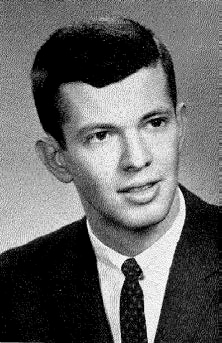
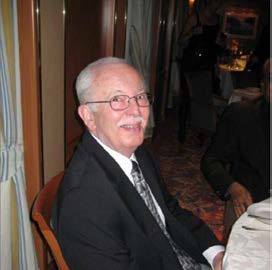
the church choir and was generous in sharing his preferences for favorite hymns and choir music. He described the church, especially the choir, as his local family.

He often addressed his church friends with expressions of abiding love and gratitude for his fellow “children of God” and found hope and meaning in God and the sacred story. In his retirement, he started volunteering weekly in the church office (folding the bulletins for Sunday worship services). The office staff and pastors counted on Floyd and looked forward to seeing him each week for his gifts were numerous and his love and heart were huge.

Floyd also told friends that when in 1993 he fell and broke his neck, God was looking out for him by sending friends to check on him and then helping him to walk again when doctors had told him that he couldn’t walk again.

In Floyd’s final days his pastor asked what scripture he wanted read at his memorial service, and Floyd said the one about Jesus telling Peter to feed his sheep three times. Here is that passage (John 21: 15-17): “When they had finished breakfast, Jesus said to Simon Peter, “Simon, son of John, do you love me more than these?” [Peter] said to him, “Yes, Lord; you know that I love you.” Jesus said to him, “Feed my lambs.” A second time Jesus said to him, “Simon, son of John, do you love me?” [Peter] said to him, “Yes, Lord; you know that I love you.” Jesus said to him, “Tend my sheep.” [Jesus] said to him the third time, “Do you love me?” Peter felt hurt because [Jesus] said to him the third time, “Do you love me?” And [Peter] said to him, “Lord, you know everything; you know that I love you.” Jesus said to him, “Feed my sheep.””

The pastor believes that this passage was chosen because “Floyd knew what it was to feed and to be fed. What a gift he was to us and we were to him. Feed my sheep lived out in real time.”

Price, who was unmarried, is survived by his beloved sister, Beatrice Price of Chapel Hill, North Carolina, many cousins in Pelzer, South Carolina and many friends and colleagues at Grinnell College, the University of Nebraska, the National Cancer Institute, the United Church of Christ of Seneca Valley and elsewhere. —Duane W. Krohnke


Charles Rehwaldt

Rehwaldt, Charles Arthur, Jr. (“Chad”) (10/16/1937–10/20/1995). Chad Rehwaldt of Muscatine, Iowa was a student at M.I.T. from 1955 to 1958 and at Grinnell from 1959 to 1961, but did not receive a degree from either institution. At Grinnell he was a Philosophy major, a photographer for the College annual (1960 Cyclone), and a member of the Camera Club. He lived in Dibble Hall. Chad served in the

U.S. Army, 1961-63. He was a self-employed photographer, 1964-69, and later he worked with a photography marketing firm. Chad was survived by his wife, Helen Frances (Burland) Rehwaldt.


Robert Rikkers

Rikkers, Robert Frederick (12/30/1939–01/02/1979). Bob Rikkers from Milwaukee, Wisconsin received a B.A. degree in Physics from Grinnell in 1961. He was a member of the Math Club, and Bob Richburg, a classmate and one of his Langan Hall roommates, testifies that Bob was really bright, especially in math and the sciences, and he seemed to be able to earn top grades without the study time required for most of us. (Rikkers’ widow thinks this is an overstatement; she said Bob did plenty of hair pulling and worked VERY hard to earn top grades, but that was in grad school.)

Bob also was a star of the Grinnell football team and its co-captain his senior year; he and the other co-captain, Jim Simmons, interviewed the candidates for the new head football coach, and their recommended candidate, Ed Bowers, got the job. Coach Bowers later said he owed his job to Bob and Jim. Bob also participated on the track team and was a member and officer of the men’s honorary athletic club (Honor G). Richburg observed that Bob was remarkable in the breadth of his interests and abilities while not talking about his many accomplishments. He just went out and did what had to be done. Bob was all around the most popular and respected guy in Langan Hall as evidenced by his being on its governing body (House Council).

In 1959, Bob and a high school friend spent the summer traveling throughout Europe. They happened to go to the beach at Scheveningen, Holland, where they met a group of young Germans. One was an attractive woman named “Renate.” She recalls meeting these “two good-looking guys and giving them my address in Germany and inviting them to visit should they come through the Rhineland. A few weeks later they appeared at my family’s door and stayed for a week. They were well fed by my mother and slept on the floor in our living room. Then Bob and I corresponded for a year or so before I arrived in the U.S.–my family didn’t even have a phone at that time, so everything took place on paper.” In 1962 Bob and Renate were married at her home in Germany.

They started their married life in Evanston, Illinois, where Bob was in graduate school at Northwestern University from 1961 to1965. There he obtained an M.S. degree in industrial engineering and a Ph.D. degree in operations research.

Bob then joined the faculty of the University of Massachusetts at Amherst, where he became Professor of Industrial Operations and Engineering and the author of a book and articles in his field. The University In his honor maintains The Robert Rikkers Garden near one of its engineering buildings.

Bob died on Jan. 2, 1979, at age 39 after a five-year battle with lympho-sarcoma. Bob was survived by Renate and their two sons, Mark and Scott, who were then only 14 and 12 years old. Renate reports, “Both sons have settled in Southwestern Colorado. Scott studied furniture design and is a successful furniture builder in the Telluride area. He and his wife, a blacksmith, are the owners of the Coal Creek Wood and Iron Works and are raising two great kids. Mark received his M.S. degree in snow physics at Boulder and leads an adventuresome life in avalanche forecasting and heli-ski guiding. Mark, who also has a M.B.A., lives in Ophir, Colorado at 10,000 feet with his wife and young daughter. Bob would be immensely proud of his sons who are living creative, athletic, and intellectually stimulating lives and carry many of his great physical and character traits.”


William Priess

Priess, William Gerald

May 31, 1940–October 7, 2008

Bill Priess of Schenectady, New York attended Grinnell for the first semester of his freshman year. He also attended Union College and Boston University and served in the U.S. Navy.

Real estate and securities sales were his endeavors in New York and Massachusetts before moving to Arizona in 1977. In Scottsdale, Bill continued these pursuits. He also became involved in the petroleum industry and was the author of Understanding the oil business: A layman’s guide to the petroleum industry and personal investing (Lincoln Petroleum Corp., Scottsdale, AZ 1981).

While working in Massachusetts, he met and married Brenda “Bunny” Goode, but they were divorced in 1989. She still remembers the excellent meals he loved to cook.

Bill died at age 68 after a long period of poor health. He was survived by two sons, William Matthew and Erich.

John Powers

Powers, John Foster (05/30/1938–06/08/1984).

John Powers started life on Maui, where he was born, and then in Hawaii, where his family lived for two and a half years near the edge of the crater of Kilauea volcano. John became a Coloradan in fifth grade, when his dad, a geologist with the U.S. Geological Survey, was transferred to Denver in late 1948.

After serving in the U.S. Army in 1956, John started at Grinnell in 1957. He received a B.A. degree in History from the College in 1961. He was on the freshman swimming team and the staff of the annual yearbook. John lived in Cowles Hall.

Immediately after Grinnell, John was a lab and pilot plant operator in Denver for the Gates Rubber Company. He then started a graduate program in history at Colorado State College, where he obtained a

M.A. degree in 1968. As a graduate student he also taught history at Aims Community College in Greeley, Colorado. Sometime after this, John worked as a supervisor of a crew building the Eisenhower Tunnel through the mountains west of Denver. Later on, John worked in the U.S. Geological Survey’s personnel department.

John in 1963 married Linda Lucille Huntoon, and after their divorce, he was married in 1971 to Mary Susann Wheeler. He and Susie had their only child, William Wheeler Powers, in 1981.

In June 1984, after a year-long illness, John died of cancer. He was survived by his wife, their three-year-old son, John’s parents and a sister (Margaret (Powers) Bogle).

One of his friends remembered a trip with John and Susie to Hawaii in 1980. “There cannot be a better companion for a trip to Hawaii than John. He knew where all the best snorkeling and beaches were. He knew the volcanoes by name, and which ones had recently erupted. He knew which plants were native and which were not, as well as what they were called in Hawaiian. He helped Susie to wake us up in the middle of the night to see the fluorescent tide and the night blooming cereus. He tirelessly drove us around three islands, knowing to prepare to eat lunch where there were no restaurants, although we, of course, also ate sushi at the famous Monkey Bar in Honolulu.”

This friend also talked about the annual New Year’s Eve party he and his wife started with John and Susie. They “met at the Japanese market in downtown Denver on New Year’s Eve, where we bought all the ingredients, and then returned to John and Susie’s home to make and eat sushi and sashimi courses until midnight. John blew the Hawaiian conch to welcome in the New Year.”

John’s family also fondly treasures John for being a proud father, for discussions about history, for games of bridge, and for being a Broncos fan. Nor can they forget his wonderful mimicking talent (he did great, funny imitations of Jonathan Winters and the U.S. Army Master Sergeant at Ft. Leonard Wood where John served after high school). John loved music, especially Hawaiian music and that of The Weavers folk singers. Unfortunately, his death prevented him from fulfilling his dream of participating in the community Messiah sing the Christmas of 1984.


Kenneth Poush

POUSH, Kenneth Dean (August 7, 1939—October 4, 2017)

Kenneth Poush Kenneth Poush Ken Poush from Nevada, Iowa was a resident of Dibble Hall and Union Headwaiter, 1958-60 and Student Librarian, 1960-61. In Fall 1959 he hosted shows (“Sound Ideas” and “Good Listening”) on the campus radio station (KGRW). He obtained his B.A. in Psychology from the College with our class in June 1961.

Ken worked as a credit analyst for Dun & Bradstreet and then as a sales representative for Fostoria Glass Co. Our class member, Jack Swenson, recalls bumping into Ken at a huge American Housewares Show in

Chicago around 1980. Ken apparently lived in California until his death in Hot Springs, CA.

Duane W. Krohnke


css.php
The views and opinions expressed on individual web pages are strictly those of their authors and are not official statements of Grinnell College. Copyright Statement.