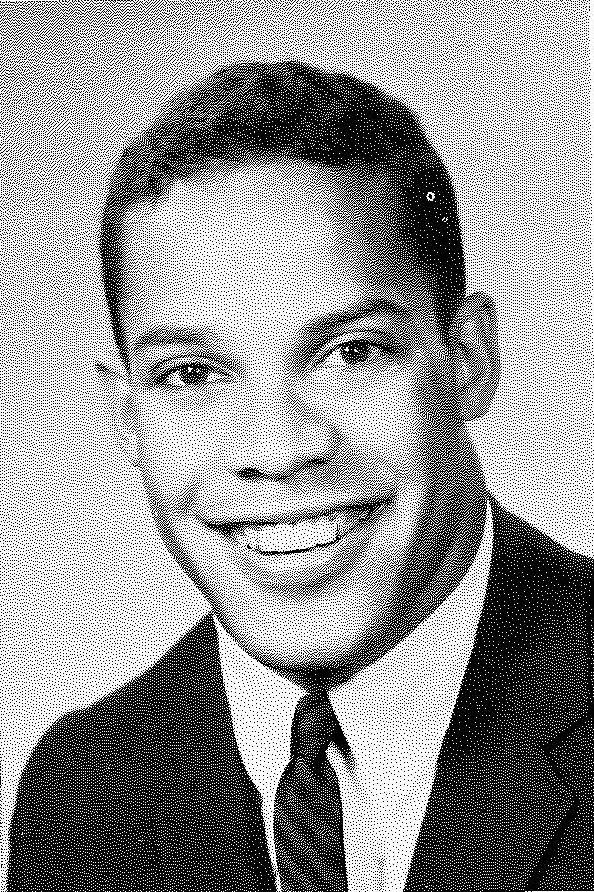
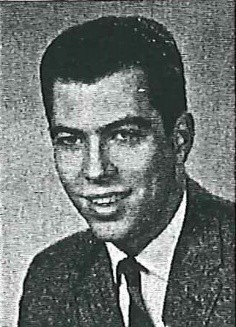
Jack Standefer

Standefer, Jack Milton (02/27/1939–11/29/2008). Jack Standefer from Des Moines, Iowa attended Grinnell for one and a half years. He transferred to Drake University, where he received a B.A. in Education in 1961. He also obtained a M.A. degree in Mathematics from the University of North Carolina.

Jack then taught mathematics in high schools in Iowa and Florida for 44 years. Toward the end of his teaching career he also taught math at Valencia Community College in Orlando, Florida.

Jack was survived by his wife, Judith and four children.


Jerry Shipley

Shipley, Jerry James (11/29/39–1/13/96). For the first two and a half years at Grinnell, I knew Jerry Shipley only by reputation: he was a brilliant and a very serious student. His heavy black-rimmed glasses and his intense manner made him a formidable person. His reputation was backed by solid accomplishment: the prize for the best academic record our freshman year, Phi Beta Kappa, in the Fall of our senior year, honors in economics and Alumni Association Senior Award.

Over the balance of our college years, I was able to get underneath the intimidating exterior shell to find a very witty person who was trying just like the rest of us to find his place in the world. We both were involved in student government and the senior men’s honorary society. We also were in a very demanding and rewarding course, the Political Economy Seminar with Professors John Dawson, Harold Fletcher and Joe Wall.

After we graduated, Jerry and I worked the following summer for Professor Dawson in the basement of Burling Library manually cranking calculators to grind out flow-of-funds numbers. Later that summer the three of us drove to Washington, D.C. to discuss these numbers with people at the Federal Reserve Bank headquarters.

It was that summer while living together that I discovered that Jerry was an excellent cook. I also learned we had similar backgrounds. We came from small Iowa towns although Jerry’s (Ames) seemed like a metropolis to me. We were only sons. We were not close to our fathers who had not gone to college and who had low status jobs (Jerry’s was a barber). Our mothers, on the other hand, had some university education, and Jerry’s, as I recall, was a secretary at Iowa State University. We both were diligent, good students who saw educational success as the way out of this background.

Jerry went to graduate school in economics at Stanford and received a M.A. degree in 1963. For reasons I never knew, however, he never received a Ph.D. after three additional years of graduate study at Stanford. From 1966-71 he taught economics at University of Maryland.

The next 11 years, 1971-1982, he was a staff economist at the Office of Management and Budget; one of the OMB Directors for whom he worked was David Stockman. He then worked as an economist for several trade associations until his death in 1996.

Jerry married another Grinnell classmate, Judy Clyde, and they had two sons, Adam and Peter.

By Duane W. Krohnke


James Simmons

Jim SimmonsSimmons, James Richard (March 1, 1939—November 4, 2022)

Jim Simmons from Chicago’s South Side joined our class after graduating with a scholarship from Francis W. Parker High School (FWP), an eminent private school just off the shore of Lake Michigan on the city’s prosperous North Side.

At Grinnell, he immediately make his mark as a capable, valuable member of our class and as a resident of Smith Hall, which he served his senior year as its president. That meant he was a member of the Council of House Presidents, whose overall leader, Gary Knamiller, says Jim always provided a feeling of warmth and laughter and support for whatever they were doing.

Jim received his Grinnell B.A. in Sociology-Anthropology in 1961 followed by a M.A. in Social Work in 1964 from the University of Chicago and a M.B.A. from Brandeis University in 1984.

As Jim told us in our 50th reunion booklet, he started at the College “intent on becoming an aeronautical engineer, [but] after almost getting buried in the science building, I made the judicious decision to switch majors from physics to anthropology/sociology. Little did I know then how that decision would significantly influence my life. It happened that I was talking to another Grinnellian, who at the time was in graduate school in social work who told me, ‘you’re good with people so you should consider becoming a social worker.’ Needless to say, I took his advice and made a wonderful career as a social worker. In retrospect, I also realize the intrinsic values of social work (e.g., acceptance of differences, valuing individual choices, and self-realization) were nurtured during my years at Grinnell.”

Jim expanded on those thoughts in the next reunion booklet when he said, with counsel from Roger Smith, his Smith Hall mate and class of 1960, “I found my true calling as a social worker, working with delinquent kids in Chicago’s inner city. I began by working with street gangs and after graduate school (University of Chicago, MA (Social Work), 1964), I worked for the Illinois Department of Juvenile Corrections, where I was responsible for the maximum security dormitory housing sixty juveniles from all over the state. My subsequent career included being a psychotherapist, administrator, consultant, college instructor, and public policy analyst. It has been very evident to me that my Grinnell experience prepared me for these experiences in ways that I didn’t realize except in retrospect. At Grinnell I learned how to think critically, express my thoughts effectively, both verbally and written. I think my altruistic tendencies were enhanced and stimulated, leading me to a stimulating and rewarding social work career.”

Nor can anyone forget Jim’s superlative athletic career at the College. In football as an end, he was a letterman and all-conference his sophomore, junior and senior years plus most valuable player and co-captain his senior year and Little All American his last two years. In basketball he was a letterman all three years plus recipient of an award for outstanding player his sophomore year. Jim also earned letters in track all three years and his mile relay team set a new conference record. Jim managed to squeeze in the freshmen baseball team his first year. All of these awards naturally made him a member of the Honor G honorary athletic club and the College’s Athletic Hall of Fame.

Jim’s positive Grinnell experience undoubtedly rubbed off on his family, some of whom also became Grinnellians: his brother (William B. Bailey, 1974), his son David Sean Simmons (1988) and daughter-in law Kimberly Simmons (1989).

Simmons’ friend and classmate from Chicago, Jim Lowry, adds that the two of them enjoyed singing old Everly Brothers songs at a College talent show accompanied by fellow Grinnellian, Herbie Hancock (class of 1960), now a world famous jazz pianist.

Immediately upon learning of Jimmy’s death, Lowry wrote, “Accepting a death of a close friend is difficult at any age, but is extremely painful during your twilight years. I just lost my close friend of seventy plus years He was the nicest person one would ever meet. This death was very painful.”

“To relieve my pain,” Lowry said, “I immediately visited his house and listened to the pain felt by his widow. I hugged her and told her I loved her. I did the same with his two fantastic sons, when they came to visit me. The same day I called my older brother and told him I’m coming to visit him and his lovely wife. In the warmth of their home we laughed and reminisced the good times. I also told him how much I love him and appreciate his being a part of my life.”

“My pain didn’t go away, but I felt better and I was able to sleep that night,” Lowry concluded. “My advice to all, don’t be afraid to tell the persons close to you, you love and appreciate them. And don’t put off the visit… they might not be there when you finally find the time in your life to visit them. Close friends are dear. Cherish, love and hug them.”

Lowry later provided a moving eulogy at Simmons memorial service on December 3 that stated, “I was privileged to know Jim Simmons (or Jimmy Simmons, as we called him on the South Side) for 75 years, thus practically all my life. My life journey with Jimmy started in kindergarten at A.O. Sexton Grammar School in the gym class led by an outstanding P.E. teacher, who was Jimmy’s Mother (and later, my surrogate mother), Phyllis Simmons.” The eulogy continued as follows:

  • “In many ways, Grinnell was an extension of FWP–academically challenging, participating in three sports and maturing as young adults. But it was at Grinnell, Jim truly blossomed as an athlete (little All-American in football, all conference in basketball and football, a solid student and a campus leader. Everyone on campus loved and respected Jim Simmons.”
  • After college graduation, . . . [Jimmy] married his high school sweetheart Joan and soon became the father of two wonderful sons—Ricky and David.”
  • “Over the next 60 years, . . . the bond between us only became stronger. There was seldom a week we did not call each other, a month when we did not view sports events together and as friends did not confess how fortunate and blessed we were for having each other in our lives.”
  • “When we both reached 80 years of age, we called each other more often, accepting we were ‘on the back nine of life,’ we repeated the same stories over and over, laughing constantly. We often mentioned, as close as we were, we never had a single argument.”
  • “Although we always shared stories of FWP, Grinnell, and local and national political events, we devoted the majority of our time discussing our families. He never stopped talking about his sons Ricky and David, whom he loved deeply. Without failure, he also would devote hours talking about his grandchildren.”
  • “Their discussions usually shifted to the two women in his life: his Mother Phyllis, who amazed us all with her longevity, intelligence and wisdom; and his wife Judy, whom he loved so much.”
  • “Jim was loved by all. Jim had a positive impact on me, on his family and on everyone who got to know him. Jim Simmons, you were my brother. I will miss you every day for the rest of my life.”
  • Jim Simmons “Keep smiling Jimmy, you are in another place, but you will always remain the anchor on whom we always lean and your smile will ever be present.”

Jim is survived by his wife Judith Simmons; sons James R. Simmons, Jr. (Ricky) and David Sean Simmons (Kimberly Simmons); grandchildren Aaron Simmons and Jeremy Simmons of Chicago, IL, Asha Simmons Paulino (Bryan Paulino), Aria Simmons, and Aidan Simmons of Columbia, SC; great-grandchildren Ashley and Ariana Simmons Paulino of Columbia, SC.; and brother William B. Bailey.

Duane W. Krohnke


Judith Clyde Shipley

Shipley, Judith (Clyde)–November 11, 1938—March 6, 2022

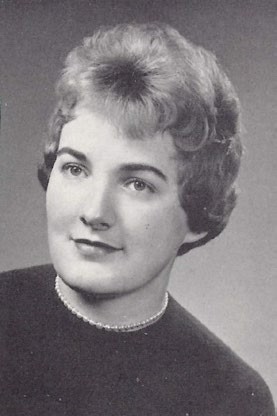
A photo of Judith Shipley, taken while attending Grinnell College. Judy Clyde left the sunny clime of Carpinteria, California to join our class in the Fall of 1957. She resided in Main Hall (her freshman year), when she became a women’s intramural tennis champion; Loose Hall (her sophomore year), when she participated in Fetzer Sing and in Loose Hall’s winning presentation at the south campus Dance Intramural competition; and Haines Hall (her senior year). Her junior year she spent in Paris at the University of Sorbonne, where she employed and honed her skills in the French language that was her major for graduation in 1961. As a result, Paris became a lifelong love for her and a place she revisited many times.

She was active in theater at the College, playing a young mother with child in the play “The Cave Dwellers” by William Saroyan and the laundress in “Tiger at the Gates” by Jean Giraudoux (English translation by Christopher Fry).

While at Grinnell she and classmate Jerry Shipley met and developed a loving relationship that resulted in their marrying on December 24, 1961. Their first son, Adam Clyde, was born in 1963; their second, Peter James, in 1966. (It also should be noted that Judy and Jerry were divorced in 1994 and that Jerry died in 1996.)

In 1962-64 Judy attended Stanford University, earning a M.A. degree in Education. (In 1982 she earned a M.A. degree in English from Georgetown University.)

After she and her family moved to Washington D.C. in 1966, Judy began her teaching career in the DC Public School system and taught French and English for 30 years at Calvin Coolidge and Benjamin Banneker High Schools. She received multiple teaching awards and recognition and her mission – lifting the lives of disadvantaged inner-city kids — is evidenced by the troves of letters and postcards she received from former students writing from places like Paris or Rome or Ivy league schools about their successes and her impact on their intellectual development.

For decades in retirement, Judy achieved her dream of travelling the world to dozens of places on every continent. Places she would study and learn about before and after her travels. Especially memorable was a Grinnell Alumni trip to Spain in 2006 with friends from our class and era.

Mexico also was a favorite place for Judy and family, especially for many simple and traditional Christmases in Zihuatanejo, Mexico on the Pacific coast. Her son Peter “will forever treasure the sunrises and coffee or sunsets and margaritas we shared together on that beach. My mother enjoyed good food and wine (just a half glass!) and was always up for exploring new culinary experiences.”

Judy was distressed at the political discourse within the U.S.– and appalled by the rhetoric of recent leadership. She believed in the institutions of this country even at its worst moment. Her sense of humor and curiosity in other people’s stories always shone through and was someone with whom you could pass hours in conversation.

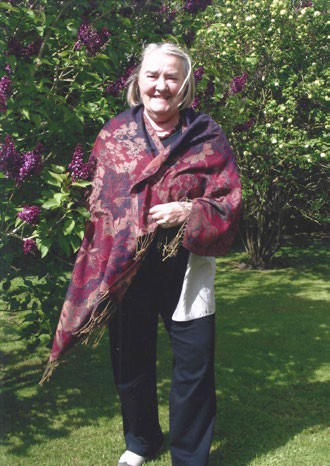
A photo of Judith Shipley, taken later in life. Her son, Peter, had the following moving words about his mother. “I am so grateful for everything she did for me and for who she was as a person…….and as I sift through her books and things, I am reminded of what an extraordinary life she led and the life she provided for me. She was a caring, supportive and patient mother, a wonderful grandmother to my children and a truly great friend.” Here is her photo from about seven or eight years ago in son Peter’s garden.

Her memorial service was held on a beautiful day in early April 2022 at Rock Creek Cemetery in Washington, D.C. It was officiated by a pastor friend who gave a short sermon. Peter’s children and wife each did a selected poetry reading and Peter read a eulogy.

Duane W. Krohnke and Nancy Welch Barnby (co-authors)


John Scott

John N. Scott (February 25, 1939—February 20, 2020)

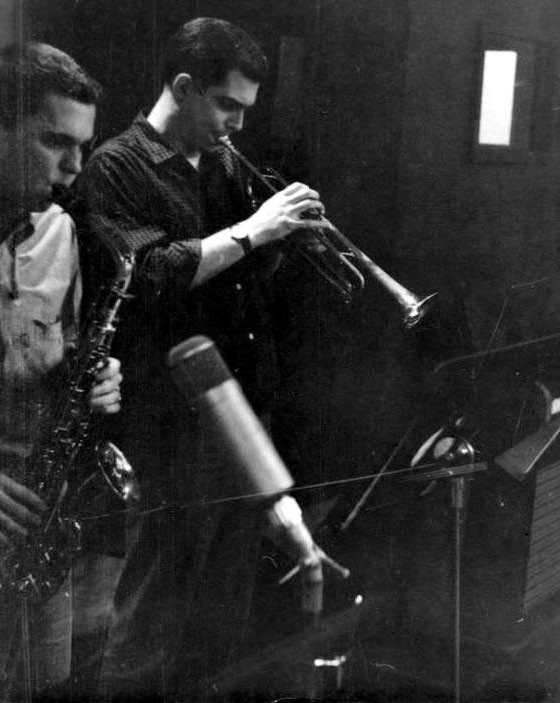
Image of John Scott taken while at Grinnell From Lexington, IL, John was with our class our first three years (1957-60). The following three years (1960-63) he studied jazz music at the Berklee College of Music in Boston and was a professional jazz trumpeter in combos in that city.

Our sophomore year, John and I lived in separate rooms in the Gates basement, and Herbie Hancock ’60 frequently came over from Clark Hall to John’s room to listen to jazz LPs on his HiFi set. When Miles Davis LPs were played, John jammed along on his own trumpet while Herbie sans piano listened and hummed. (How amazing that only a few years later Herbie was a member of the Miles Davis Quintet, 1963-68.)

In the spring of our junior year, John played the trumpet in the Herbie Hancock Quintet on campus with Herbie, piano; Bob Taylor ’63, trombone; Phil Balick ’63, bass; and Steve Hecht ’62, drums. According to the S&B (the student newspaper), the group’s music included three pieces written by John plus three others by John and Herbie together with “the bulk of the credit” for the latter belonging to Hancock. Two of the Hancock-Scott tunes—“Portrait of Miles” [Davis] and “Griffin”–had been well received in “the Chicago jazz world” by 1960 with “Portrait of Miles” being played on the road by a group led by the well-known drummer, Philly Joe Jones. The S&B article also said, “Scott aspires to writing as well as playing jazz,” as he “is a serious student of jazz, and his one ambition is to play it” with those skills to be enhanced by his attending Berklee (‘Cool’ Five Play Oldies, Moderns, S&B, April 22, 1960).

Although Hancock had played in or led several jazz group throughout his four years at the College, the S&B article reports Herbie saying, this group was the best of all of them. “There’s something happening with this group. Most of the guys are seriously interested in jazz and are trying to say something of their own. It makes playing a gig more than just another dance job.” Moreover, with the previously mentioned originals, said Herbie, “We play a lot of tunes no one else plays.”

Moreover, Herbie, in his 2014 memoir Possibilities, recalled that John could “play pretty well” on the trumpet and became “a close friend; we even wrote a song together that I would later record for my second album,” My Point of View with trumpet by Donald Byrd (Blue Note 1963). That song was “A Tribute to Someone,” which was written and played at Grinnell as the previously mentioned “Portrait of Miles.”

Another Hancock-Scott song, “The Maze,” also was written and played at Grinnell and was recorded on Herbie’s first album, Takin Off (Blue Note 1962) with trumpet by Freddie Hubbard and is listed as a Hancock-Scott composition in The Real Jazz Solos Book (MP1630.28.R44 (2014) on the Berklee College of Music website.

Somehow, John found time, presumably 1963-64, to attend Southern Illinois University to obtain a B.A. degree before going to the University of Illinois Medical Center in Chicago to obtain

D.D.S. (Doctor of Dental Surgery) and M.S. degrees in 1966. Thereafter he was a successful endodontist performing root canal surgeries in the Champaign-Urbana area.

John Scott plays the trumpet. While he was practicing endodontistry during the days, at night and on the weekends, John played trumpet in jazz combos he formed while mentoring many young jazz musicians, composing many jazz tunes and recording jazz CDs. Later he created a more durable set of 10 CDs of his ensembles and compositions from Chicago and Central Illinois along with a list of his compositions. (Planet of Fools: A Tribute to John “Dok” Scott, https://sites.google.com/view/dokscott/compositions.) Now we can understand why his email “handle” was “jazzdok.”

On August 30, 1967, John married Nancy H. Pogel ’62, but they were divorced around 1973. A second marriage to Linda Gavelek also ended in divorce.

John retired from his medical practice in 2003 and moved to Las Cruces, NM, for the next six years before returning to Central Illinois. After living in a memory care facility, John died on February 20, 2020 in Mahomet, IL. He was survived by his sisters Jeanie Scott and Ruth Scott Robben.

Duane W. Krohnke


Nancy von Lackum Scarola

Scarola, Nancy Jean (von Lackum) (05/15/1939–12/14/2000). Nancy von Lackum of Waterloo, Iowa received a B.A. degree in American Studies from Grinnell in 1961. She was active in the Women’s Recreational Association (Dance Intramural Chair), the women’s swimming club (White Caps) and lived in Loose Hall. Later she was a teacher in Denver, Colorado. In 1963 she married Richard Gridley Barrows. After their divorce, she married a Mr. Scarola.


W. Ernest Rutherford

William Ernest “Ernie” Rutherford, M.D. (June 12, 1939–July 28, 2012)

On July 28, 2012, the Grinnell College Class of 1961 unexpectedly lost a talented classmate and friend, Dr. William Ernest “Ernie” Rutherford. On a beautiful Saturday morning near his Monroe, Louisiana home, Ernie accidently drowned.

Ernie made significant contributions to our undergraduate years, 1957-1961. He lived in Cowles Hall and served our junior year as its Vice President and the next year as its President and thus as an ex officio member of the Council of

House Presidents (C of HP). He also was on the staff for the 1960 Cyclone yearbook. Ernie was a letterman in track and football and thus a member of Honor G.

On the track team he was a pole vaulter and javelin thrower. At the Midwest Conference meet in 1960, he tied for first in the vault and was third in the throw. His senior year, Ernie was the Captain of the team and finished first at the Conference meet in both of his events with a vault of 13 feet and a throw of 170 feet. In 1961 he was awarded the College’s Harold Alexander Trophy for the Most Valuable member of the track team. (To the right is his photo with his pole and javelin from the 1961 Cyclone.)

A football game program from 1958 said he was a “5′ 9,” 155-lb. tailback [who was] inexperienced, but doing a fine job. A good passer, he will probably run the team next year.” (To the left is his photo from that program.) The next two years, however, the team switched from a single-wing to a winged-T offense led by quarterbacks, Bob Woito ’60 and Art Peterson ’63. Nevertheless, Ernie earned letters for three years as a defensive back.

Ernie’s involvement in football and student government his senior year merged in an interesting tale of Ernie’s leadership.

Grinnell won its final football game in 1960, defeating Ripon, 23-0. After the team’s return to campus that night, they had a festive beer blast on North Campus (Mac Field). As a result of the party’s noise, some house presidents (and hence Ernie’s fellow members of C of HP) went onto Mac Field and indiscriminately issued fines to members of the team.

Afterwards, Ernie was upset and led discussions at Cowles as to what should be done. As a result, Cowles (led by Ernie) seceded from student government and proclaimed that it would thereafter make and enforce its own rules, would no longer be part of student government and would not be subject to C of HP rules and dictates. (To the left is a photo of the leaders of the Cowles secession (from left to right): Ernie Rutherford and our classmates John Powers, Bill Kell, Jack Pitts and John Morris.)

The Cowles secession gathered much sympathy from other students and even from some faculty members (really something of a rebellion against in loco parentis). Students in other residence halls began to contemplate secession, and for a time it appeared that the whole fabric of student government might fall apart. Instead, in the Spring of 1961 a student constitutional convention was held that with subsequent student referendum approval totally reorganized student government.

The new constitution formed a new Student Government Association (SGA) with a Student Senate to make the rules for student conduct, the existing C of HP and AWS (Associated Women Students) Board to enforce the rules and new student courts to adjudicate violations of the rules. In the Spring of 1961, at the student government nominating convention, Rutherford gave the nominating speech for his fellow Cowles secessionist, Bill Halama, who went on to win the election and become the first SGA president in 1961-62.

Ernie’s obtaining Grinnell’s B.A. degree in Chemistry-Zoology in 1961 was an important step in his journey to fulfill his dream from age 4 of becoming a medical doctor. (His senior photo from the 1961 Cyclone is to the right.) His interest in the College was sparked by a visit to his high school in Albuquerque, New Mexico by a Grinnell admissions counselor who helped him obtain a scholarship that enabled Ernie to attend the College.

After graduating from Grinnell, Ernie took the next step in becoming a physician. He went directly to the University of Colorado School of Medicine, where he obtained his M.D. degree in 1965. For his last year of med school he was awarded a prestigious scholarship by the Boettcher Foundation. In 1964, during his junior year in medical school, he married Ileta Fay Atchley and began their life of 48 years together.

From 1965 through 1967 he was an Intern and Resident at Barnes-Jewish Hospital and the Washington University School of Medicine in St. Louis.

Drafted in 1967, Ernie spent the next three years in Germany as an Air Force doctor while he and Ileta traveled throughout Europe and Scandinavia. He developed a love of skiing and became an honorary member of ski patrols in Germany and Czechoslovakia.

In 1970 he returned to Barnes-Jewish Hospital and Washington University School of Medicine in St. Louis as a Research Fellow in Renal Disease where over the next eight years he did pioneering research on chronic kidney disease.

In August 1978 he and his family moved to Monroe, Louisiana. There he started a new life in the private practice of medicine to meet the medical needs of the large African-American population with high incidences of diabetes and kidney diseases. By 1982, he and Dr. Joan Blondin opened the first Northeast Louisiana Dialysis Center in Monroe, ultimately growing the practice to six clinics in the region. Dr.

Rutherford was influential in establishing a rural health clinic in Start, Louisiana with Jennifer Bennett who worked with him since 1981.

In November 2006, Ernie started another new venture–university teaching. At Louisiana State University Conway he was a full professor of clinical family medicine, always teaching his residents to question everything, and to learn the “why” not just the “what,” and always to listen to the patient (his mom always told him that). He received the teacher of the year award in 2010.

Ernie is survived by his wife Ileta, son Phillip Raymond Rutherford (Grinnell ’88) and his wife Felicia Stingone and their two daughters Gabriella and Francesca, son Jason Stewart Rutherford ’93 and his wife Jessica Rutherford and their two daughters Melanie and Nina, sister Margie Kimbrough, and a ‘surrogate’ son Joe Mansour. He is also survived by numerous sister- and brother-in-laws, nieces and nephews.

Gifts may be given to Grinnell College in memory of William “Ernie” Rutherford ’61. Friends and family wish to establish a scholarship that will benefit Grinnell students interested in pursuing a degree in medicine. Those wishing to contribute may do so by sending a check to Grinnell College, Old Glove Factory, Attn: Meg Jones Bair, 733 Broad Street, Grinnell, IA 50112.

Walton, Funeral Services Set for Drowning Victim (July 30, 2012), http://myarklamiss.com/fulltext?nxd_id=154452

; Brown, Update- Man Drowns in Bayou Desiard (July 30, 2012), http://myarklamiss.com/fulltext?nxd_id=154312; Obituary, William Ernest “Ernie” Rutherford, http://www.legacy.com/obituaries/thenewsstar/obituary.aspx?n=william-ernest-rutherford-ernie&pid=158868332&fhid=12536#fbLoggedOut.
 

Phyllis Rogers

Rogers, Phyllis Noreen (01/23/1940–11/17/2007). Phyllis Rogers of Fulton, Missouri, after a year at Williams Woods College, transferred to Grinnell in 1958. She received Grinnell’s B.A. degree in Mathematics in 1961. She had an excellent academic record: Linn Smith Prize for Excellence in Mathematics and Phi Beta Kappa (1961). She also received the Ladies Education Society Citizenship Award. She was a member of the Math Club, the Choir and Women’s Glee Club. Phyllis lived in Cleveland and James Halls.

Upon graduation, Phyllis was awarded a Grinnell Travel Service Scholarship for a year’s work (1961-62) at the College of Commerce in Tanganyika (n/k/a Tanzania). She then studied economics for the next four years (1962-66) in graduate school at the University of Minnesota, where she also was a teaching assistant. Phyllis then embarked on a career as an actuary for several insurance companies and later the Presbyterian Ministers Fund. She was elected as a Fellow of the Society of Actuaries and membership in the Academy of Actuaries.


css.php
The views and opinions expressed on individual web pages are strictly those of their authors and are not official statements of Grinnell College. Copyright Statement.