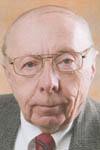
John Wassom

John Clark Wassom, November 13, 1939–July 26, 2011

John Wassom from the town of Grinnell graduated in June 1961 with a B.A. in Economics. His father, Samuel J. Wassom, was the manager of the Grinnell College Book Store while we the Class of 1961 were there. John lived at home and worked in the College mailroom during college. Later he was known to express pride in being a Grinnell College graduate.

After Grinnell, John went to Indiana University where he earned M.A. and Ph.D. degrees in Economics in 1963 and 1971 respectively.

He was an Assistant Professor of Finance at the University of Florida from 1966 through 1971.

John then joined the faculty at Western Kentucky University in Bowling Green as an Assistant Professor of Economics. In 1978 he was promoted to Professor and Head of the WKU Economics Department, a position he held until 2003. John, however, did not retire. Instead he became a Professor and Special Assistant to the Dean of WKU’s Gordon Ford College of Business, a position he held until 2005. Then he became Chair of the Business Division of WKU’s Community College, a position he held until his death.

John’s publications include two books: The Relevance of the Common Carrier Concept to the Contemporary American Transport System (U. Indiana, 1970) and Newtruck: Directory of Motor Carrier Data (co-author, Dr. Dan St. Clair).

John loved horticulture and gardening and his dogs.

But his true love was his wife of 50 years, Sharon Ferneau Wassom also of Grinnell, his son and daughter-in-law, Greg Wassom and Melissa Chase Wassom, and two grandsons. John also was survived by two sisters, two brothers-in-law and several nieces and nephews.

A scholarship has been established in his honor at WKU: The John C. Wassom Memorial Scholarship Fund, c/o College Heights Foundation, 1906 College Heights Blvd., P.O. Box 41016, Bowling Green, KY 42101.


Susan “Suzy” Valentine

Valentine, Susan (October 19, 1940—September 7, 2023)

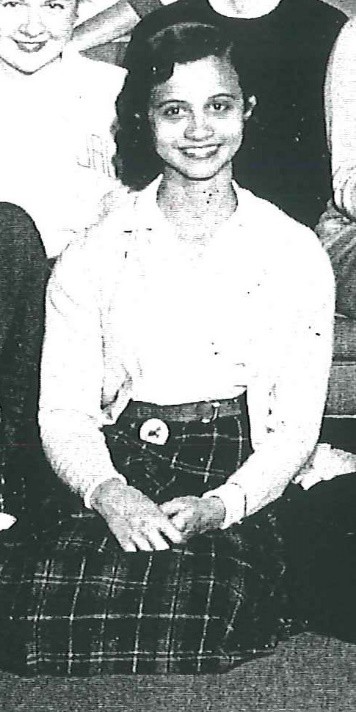
Photo of Susan Valentine taken when attending Grinnell College. Susan Valentine, known by all as Suzy, arrived at Grinnell College in the fall of 1961, immediately establishing her place among the pioneering women who lived in Mears Hall during the first year it was temporarily re-born as a women’s residence hall. New students had to wear Grinnell beanies that year, so tall Suzy was an obvious new presence on campus.

It is fitting that Suzy’s only club affiliation during her two years at Grinnell was the International Relations Club. Home in New Jersey during the summer of her sophomore year, Suzy met Nelson Small Schmitt, a Brazilian whom she eventually married. She withdrew from Grinnell, and attended the University of Pennsylvania, studying psychology before marrying Schmitt in July of 1961 and moving with him to Sao Paulo.

Suzy formed a strong interest in gardening during her 32 years in Sao Paulo, where she gardened at her own home, and did volunteer work for various environmental causes. The Schmitt’s three sons were born in Brazil during the 1960’s; all three were to attend college in the United States. After a divorce, Suzy returned to the United States, settling in Florida where, she noted, all of her activities dealt “with the natural world.”

The gardening interest continued as Suzy became president and founder of “Grow Foundation,” and worked with a new partner, Mel Bartholomew, in Alpine, Utah, where together they had a business, Square Foot Gardening. From there Suzy lived in other locales, always focusing on her interest in nature.

Suzy died of cancer on September 7, 2023, in Bonita Springs, Florida.

Nancy Welch Barnby (author)


Rosemary Hibbard Turnbull

Turnbull, Rosemary (“Rosie”) (Hibbard) (Pomeroy) (01/09/1941–10/15/1997). At age 16, Rosemary Hibbard from Westtown, Pennsylvania enrolled at Grinnell in 1957 and after one year transferred to Simmons College in Boston and then Ryder University in New Jersey where she received a B.A. in 1962. She also obtained a M.S.L.S. degree in library science from Drexel University in 1971.

Rosemary spent 25 years as a school library director in New Hampshire. She was a longtime member of Delta Gamma International, an honorary society for librarians, the Quakers, the New Hampshire Alliance for the Mentally Ill and PEO.

In 1960 she married Rev. George Robinson Pomeroy, and after their 1988 divorce, she married William Turnbull. In 1997, after a long illness, Rosemary died in her home. She was survived by her husband William, two children (Marion L. Pomeroy and Bradbury S. Pomeroy), two stepchildren and her father.


Robert Trepka

Trepka, Robert Dale (12/16/1938—07/18/1993). Bob Trepka was born in a sod-brick house on a Nebraska farm. He attended a one-room school until ninth grade. Because his parents wanted him to have a better secondary education, he boarded with a Crete, Nebraska family during his high school years. But even in Crete there were limited course offerings and only 55 in his graduating class. Bob had to supplement his education with correspondence courses. In spite of this, he was a National Merit Finalist and was awarded a full scholarship to Grinnell.

Bob lived in South Younker and was member of the Hall House Council, 1960-61. He played the trumpet in the Grinnell College band and was active in the Math Club. He was elected to Friars, the senior men’s honorary society, and Honor G, the men’s honorary athletic club. The New York Times on March 22, 1961 published a photo of Bob with five other Phi Beta Kappa members of the Grinnell track team above the caption, “On your mark, get set, think.”

Bob majored in chemistry and spent two summers in Grinnell doing NSF research (and corn de-tasseling). He was awarded the Chemistry Alumni prize.

A week after graduation from Grinnell, Bob married classmate Judy Anderson. The couple immediately set off for California; UCLA had awarded Bob a graduate fellowship. In 1963-1964, Bob was research assistant to Professor Donald J. Cram, winner of the 1987 Nobel Prize in chemistry. In December 1964, Bob completed his PhD and received a NATO postdoctoral fellowship to do research at the University of Munich, Germany.

When Bob returned to the United States, he began work at the 3M Company in St. Paul, Minnesota. He spent five years in Central Research, before joining the Photo Products Division. This position involved spending a year at the 3M laboratories in Harlowe, England and Ferrania, Italy.

At the age of 38, Bob was diagnosed with non-Hodgkin’s lymphoma. During the next 16 years, he experienced remission and recurrence as the disease moved from one area of his body to another. Bob continued to work productively during this time missing only a few weeks for surgeries and treatments. After a valiant struggle, he died at the age of 54.

Bob and Judy have three children who all graduated from Grinnell: Mary Jo ’86, Jim ’89, and Carolyn ’92. By Judith Anderson Trepka


Carol Thacher

Thacher, Carol Louise (July 28, 1939—March 15, 2014)
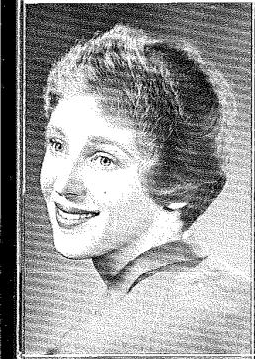
“Thach” to those who knew her well, Carol Thacher cut a vibrant figure on the Grinnell College campus. Tall and willowy, a blond who was both brainy and vivacious, she embraced with zest her years at Grinnell and, indeed, all seventy-four of her years on this earth. Well-rounded as a Grinnell student — and that’s an understatement — Carol was Mortar Board and baffleboard, cheerleader and Women’s Honor ‘G.’ She earned a B.A. in Psychology at Grinnell, and also garnered an Iowa elementary teaching credential during those four college years.

From Grinnell, Carol ventured to the east coast to accept a teaching position in Connecticut, but after a year returned to the Midwest, where she taught 5th grade for eleven years in the Minneapolis area. She also married (George Skluzacek) and gave birth to a daughter, Marta. During those same years, Carol earned a Master’s Degree in Educational Psychology at the University of Minnesota.

At Grinnell, Carol had always taken advantage of the opportunities before her. And as a young adult, that “can do” attitude somehow propelled her into the study of law. Receiving her J.D. degree in 1978 from William Mitchell College of Law, Carol began a 30-year career, working with three Minneapolis law firms — two in which she was a partner. As Carol whimsically remarked at our 50th reunion dinner, “It actually turned out to be an advantage to be a lawyer who knew how to talk to fifth graders.” She finally retired (sort of) in 2011. She continued to be involved in various committees and kept close track of her lawyer friends, but was happy to have “time off” to pursue her many interests. She loved spending time with her grandchildren.

In 1984 Carol remarried, partnering with fellow lawyer Steven Ross. Steve was an avid biker, and in her love and admiration for him, Carol approached a new challenge in her usual manner: “Biking? Never have tried it, but why not?” Thus, she and Steve biked often –together, with friends, near home, and far away. When Steve died after a valiant battle with melanoma in 2001, Carol faced life with courage and perseverance although she admitted that it was often difficult.
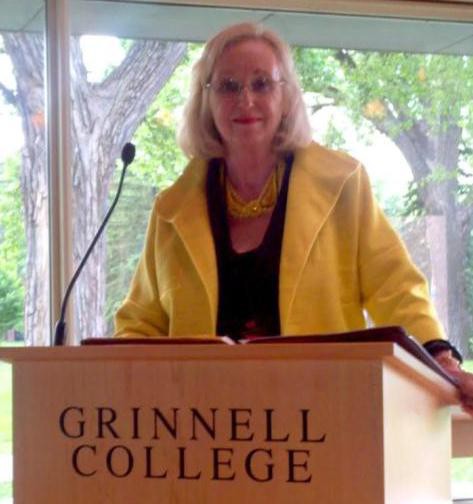
Because of her great sense of humor and ability to express herself well in any situation (indeed, teachers and lawyers alike can spontaneously pour forth on any occasion), our Class of 1961 reunion committee wisely tapped Carol to be the MC for our 50th Reunion Dinner. In an after-dinner talk which was both poignant and funny, Carol recalled life at Grinnell during our era: Saturday classes, the M & St. L railroad, Saga Foods, pinning serenades, typewriters, one-phone-per-floor in the women’s residence halls (on Loose 2nd where Carol lived for three years, that translated to a 40:1 ratio, girls-to-phone, unimaginable today). She also pinpointed some of her own special memories. She laughed at her own cheerleading faux pas, calling out, “First-and-ten, do it again,” at a Pioneer football game when, in fact, the other team had possession of the ball. And do you gals (now that’s a word which Thach would have used!) remember that during our junior year Carol had the responsibility of initiating the singing of grace each evening in the Quad dining room? She recalls one time when the dinner gong threw her off key and she began to sing at much too high a pitch, thus turning the dining hall denizens into “a bunch of giggling, shrieking chipmunks.” Did Carol have the ability to laugh at herself? Oh, yes, she did, always . . . always.

The Twin Cities newspapers included this bit in their obituary about our Grinnell classmate: “Carol was a loving mother, daughter, grandmother, wife, sister and dear friend. She was a connoisseur of relationships, which she tended with love, care and attention. Carol was a wise and charming woman, expressive and clever. She was a creative problem-solver throughout her life, but finally faced a challenge she could not overcome. Four months before she died Carol was diagnosed with Stage IV lung cancer which had metastasized to her brain. She fought this disease with her characteristic practical determination until she determined that the usual victory was not to be hers. Her exit from our lives was just the way she would have wanted it — on her own terms.”

Carol Thacher proposed the following toast during the denouement of her delightful presentation at our 50th reunion dinner: “To old friends — those with us now, those who couldn’t make it, and those who are no longer with us. And to our younger selves — their activities, their plans, their promise. May we always remember with gratitude their part in making us who we are today.” Yes, Thach, and those of us fortunate to have been your friend, at Grinnell or in the years that followed, truly know that you were one of a kind.

Nancy Welch Barnby & Judy Mahle Lutter
 

Memories from Carol’s daughter

IN MEMORIAM: CAROL THACHER July 28, 1939 – March 15, 2015

Carol Thacher was born in Long Beach, California, the oldest child of a U.S Navy captain and a teacher. She lived in several states throughout her childhood and adolescence as the family traveled with the Navy, eventually settling in Minnesota.

She died in March 2015, just four months after being diagnosed with an aggressive form of lung cancer. Preceded in death by her father, Robert Thacher, and her husband, Steven Ross, she left behind her mother, three sisters, a brother, her loving daughter and step-daughter, four grandchildren, and countless friends and admirers.

Carol had two careers in her lifetime – teacher and attorney – and did both professions a great credit with her wise, thoughtful counsel. The quality that made her such a trusted lawyer had already been developing for years during her time as a 5th grade teacher at Highlands School in Edina. Carol often described herself as a problem-solver. She could draw a map of downtown Minneapolis with startling precision, explain complicated ideas in straightforward terms, and mediate even the most acrimonious disputes. She was brilliant and charismatic, loved and trusted by students, colleagues, clients, family and friends.

A graduate of Iowa’s Grinnell College who earned a bachelor’s degree in psychology, Carol taught for 11 years before deciding she was ready for a new challenge. After she left the classroom, Carol earned a master’s degree in educational psychology from the University of Minnesota in Minneapolis and took some time off to be with her infant daughter, born at the end of 1972. Within a couple of years, Carol realized she was suited more for a professional life than a domestic one and started classes at William Mitchell College of Law in St. Paul, graduating in 1978.

Carol’s business law career spanned three decades and three law firms, one of them with her own name. She began her career with Robins, Davis, and Lyons (now Robins Kaplan) and became one of their first women partners. She then struck out on her own for several years before joining Gray Plant Mooty for the last few years of her career, both as an attorney and a mentor to new attorneys.

Carol also generously donated her time and talent to several organizations during her lifetime, most notably the boards for the Sister Kenny Foundation, Abbott Northwestern Hospital, and Creatives for Causes, a nonprofit founded by her sister, Sue Crolick.

Carol was a warm, affectionate, and charismatic woman, known for solving virtually any kind of problem. She loved bridge and movies with her friends, reading to her grandchildren, and spending time with her daughters. She laughed easily and worked hard. We miss her so much.

— Marta Carol Drew, Carol’s daughter


Memories of Carol Thacher

Memories of Carol Thacher

I did not know Carol during our college days although I obviously knew she was a beautiful, outgoing cheerleader and a member of Tassels (freshmen women’s honorary society) and Mortar Board (senior women’s honorary society).

After she became a lawyer in downtown Minneapolis, she specialized in providing legal advice to businesses on various issues. As counsel at a law firm at the end of her legal career, she also was a mentor to many beginning lawyers. One of them said she had “taught me about professionalism, the value of practical advice and the importance of listening” and that he “realizes now the fundamental impact [she] had on my practice.”

As fellow Minneapolis lawyers, Carol and I occasionally had lunch together for general conversation about legal practice, family, Grinnell friends and general issues of the day, but our relationship did not really start until she hired me to represent her Italian client in a lawsuit in state court in Minneapolis. At the time Carol was a partner in a small law firm that did not have litigation capabilities.

Although the client in the lawsuit was a Minnesota corporation, it was owned by an Italian businessman, and in reality the litigation was an intra-Italian family dispute or feud. As a result, Carol and I had many meetings and conversations about facts and legal issues in the case.

She was deposed in the case, and I was her lawyer. The opposing counsel was unnecessarily annoying, and I had to make many objections.

When our principal client contact, Federico, was in town for the case, he joined Carol, her husband (Steve Ross), my wife (Mary Alyce) and me for a delightful dinner at Forepaughs, a restaurant in an elegant, 19th century St. Paul mansion.

Later Carol and I had a trip together to visit the client in Bergamo, an old city in Lombardy northeast of Milano and the hometown of opera composer Donizetti. On a weekend Federico took us to Verona, where he had played trumpet in a production of “Aida” in its Roman Coliseum. Our walk around the city took us to the famous balcony where Juliet was wooed by Romeo. On our return to Bergamo, we stopped for lunch at a restaurant overlooking Lake Como. It was the best day of the trip.

As her class obituary says, Carol’s after-dinner remarks at our class’ 50th reunion were wonderful. She charmed me by recalling her student years when she was skinny and could eat anything she wanted and could sleep through the night. That also was a time when she “was so naïve a lot of life’s problems and issues passed me by” and “could easily be surprised by the dumbest things.” Then she “could touch her toes, walk and chew gum at the same time,” and “the guys would flirt with me and ask me out on dates.”

Carol’s last days were spent in hospice care, and the day before she died, I visited her. Although she was sleeping and non-communicative, I told her that all of our classmates and I loved and supported her in those difficult days.

The Minneapolis StarTribune obituary guest book had these two entries from classmates. Phil Grimm said, “My heartfelt thoughts are with Carol’s family. Carol was a good friend at Grinnell. A great dance partner with a beautiful smile. Carol made our 50th reunion a great success with her wit and charm. We’ll miss her.” Jack Erler added, “My thoughts are with her family. A long time ago Carol and I together endured psychology, worked at Wyonegonic and became lawyers in states with the first letter M.”

Carol is survived by daughter and son-in-law (Marta Skluzacek (Brian) Drew), stepdaughter (Kerry Ross) and four grandchildren (Henry, Caroline and Elizabeth Drew and Asher Ross). Other survivors are Carol’s mother (Beatrice Thacher), sisters and brothers-in-law (Sue Crolick, Ann (Will) Schmid, and Becky (Tracie) Bell), brother and sister-in-law (Tom (Su) Thacher), brother-in-law (Rick Ross), sister-in-law (Sande Ross) and many loving nieces and nephews.

Duane W. Krohnke


Carol Williams Sykes

Carol E. Williams Sykes (February 2, 1940—September 17, 2014)

Carol E Williams Sykes. Picture taken while attending Grinnell. Carol Williams was from Chicago’s Morgan Park High School, where she was one of its first African-American cheerleaders. She was a student at the College, 1957-59. In her freshman year, she was a member of Orchesis, a women’s modern dance group, and the next year was a staff member for the 1959 Cyclone. She lived in James Hall the first year and in Loose Hall the second.
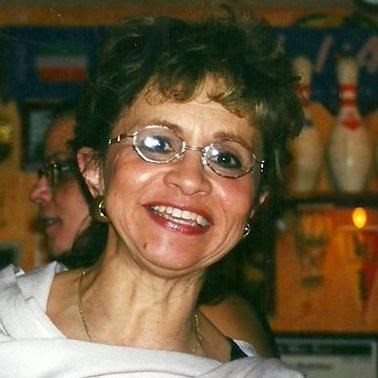
Thereafter, she obtained a B.A. degree from Roosevelt University and a Master’s from National Louis University. Then she was a teacher for the Chicago Board of Education until she retired in 1990.

Carol E Williams Sykes Carol, for many years, was a member of committees and boards of the Art Institute of Chicago, a supporter and Board Member of the Deeply Rooted Dance Theatre and member of the Chicago chapters of Smartset and Girlfriends social clubs. She loved to travel and visited many countries.
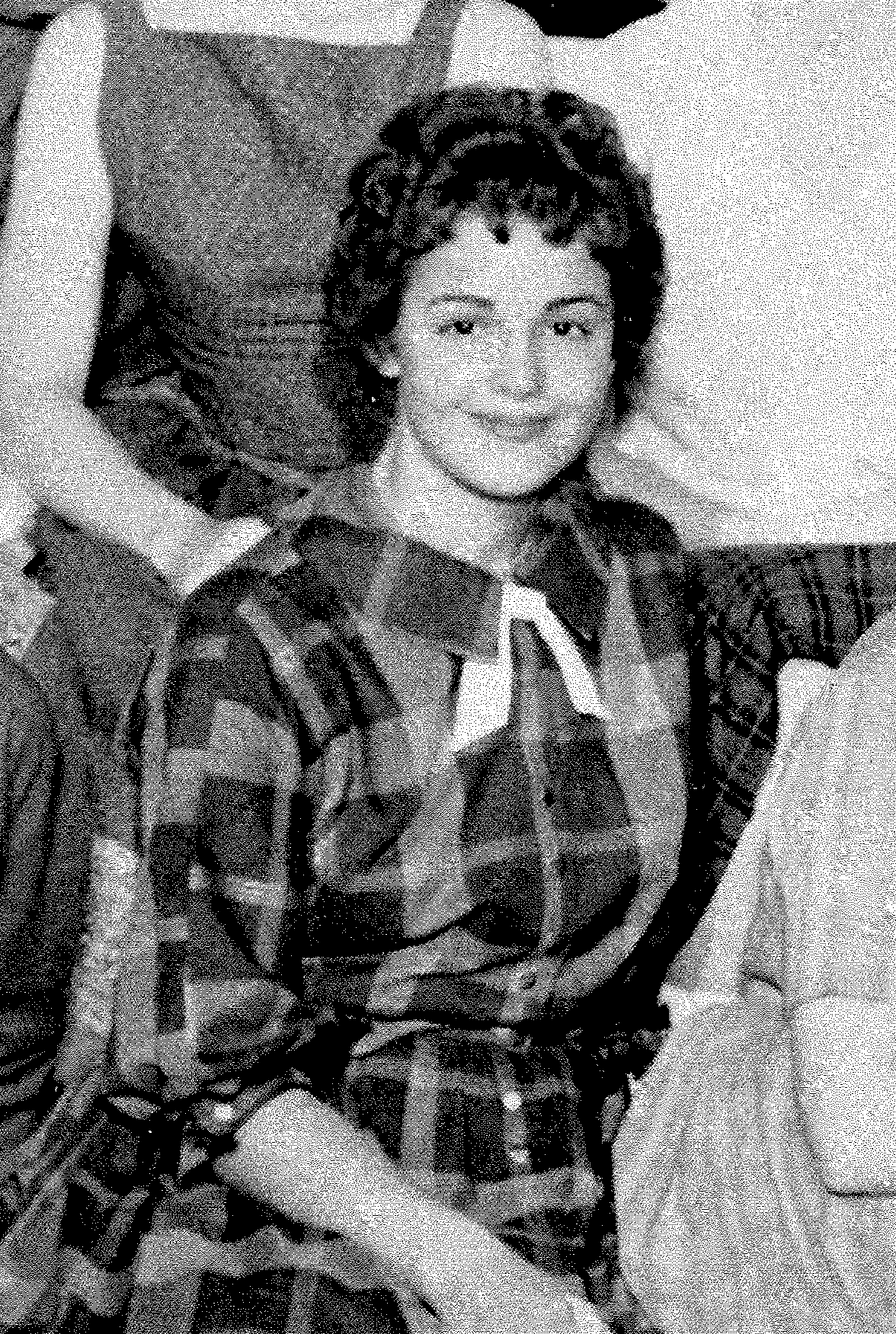
On August 2, 1960, she married Weathers York “Sonny” Sykes. They had two children: Lori Denise Sykes Stewart (Rodney) and Stephen York Sykes, who survived her along with stepson Rev. Michael Gregory Sykes (Myra) and three grandchildren.

Duane W. Krohnke


Judson Stone

Stone, Judson Lewis (“Jud”) 05/25/1938–02/17/1990. Jud Stone from Topeka, Kansas served in the U.S. Army, 1956-57, before enrolling at Grinnell in 1957. He received a B.A. degree in Psychology in 1961. He was active in the campus radio station (KGRW) and lived in Langan Hall.

In 1963 he obtained a Master’s Degree in Social Work from the University of Michigan. He then worked as a child therapist before becoming the Director of the Downriver Child Guidance Clinic in Detroit. When federal legislation mandated development of community mental health centers, Jud became one of the earliest directors of such a center. In 1981, Jud moved from Michigan to Illinois to become of Director of the Elk Grove-Schaumburg Community Mental Health Center in suburban Chicago.

In 1960 he married Judith Bourne Stone (Grinnell 1960). When Jud died at age 51 in 1990, he was survived by Judith and their two sons.


Carol June (”Judy”) Wasick Stanley

Stanley, Carol June (”Judy”) Wasick (June 19, 1939—July 20, 2008)

Z:\ADSHARE\ALUMNI RELATIONS\CLASS LETTERS\To Be Processed\wasick_Page_1.png Carol June (“Judy”) Wasick from Chicago was with our class for our freshman and sophomore years (1957-1959). She lived in Cleveland and Read halls and was involved in the Orchestra, Glee Club, Cosmopolitan Club and Young Republicans. Here is a photograph of her from the 1959 Cyclone.

Judy went on to get her B.S. degree from Cal Poly and her Masters degree in English as a Second Language from Fullerton State University. She then became a public elementary school teacher until her retirement in 1995.

In August 1959 she married Glen Preston Blanton, Jr., with whom she had two daughters (Sydney Lynn and Alysia Ann). Her second marriage in March 1977 was to Emilo J. Stanley, a geography professor from Yugoslavia.

Duane W. Krohnke


css.php
The views and opinions expressed on individual web pages are strictly those of their authors and are not official statements of Grinnell College. Copyright Statement.