Leven, Norman H.
June 20, 1939–June 8, 1995
Norman Leven of Chicago spent one semester (1957-58) at Grinnell and then transferred to the University of Illinois. After 1966 he apparently lived in California.
Grinnell College Class Letters
Promoting and sustaining relationships between classmates and the College.
June 20, 1939–June 8, 1995
Norman Leven of Chicago spent one semester (1957-58) at Grinnell and then transferred to the University of Illinois. After 1966 he apparently lived in California.
Gil Kelly ’61 from Omaha, Nebraska was at Grinnell for his first three semesters of college, He was active in the Young Republicans; on the staff and business manager of the Maverick, a literary quarterly publication; and a member of the Manuscript Club. Another officer of Maverick, Jerry Tecklin ’60 remembers Gil as “a bright and extremely quirky fellow. He was a dedicated classics major, a very rare thing then, and a student of Classics Professor William McKibben, who was very intelligent, warm, and very quirky himself. Gil immersed himself in reading and studying among piles of books in his Langan Hall room and hardly appeared outside of his cave, having secluded himself for high-minded search into knowledge with a capital K.”
Indeed, according to the 1958 Cyclone, Gil’s “room became one of the wonders of the world” or in the words of a classmate and hallmate, “to get into his room you had to take a run from
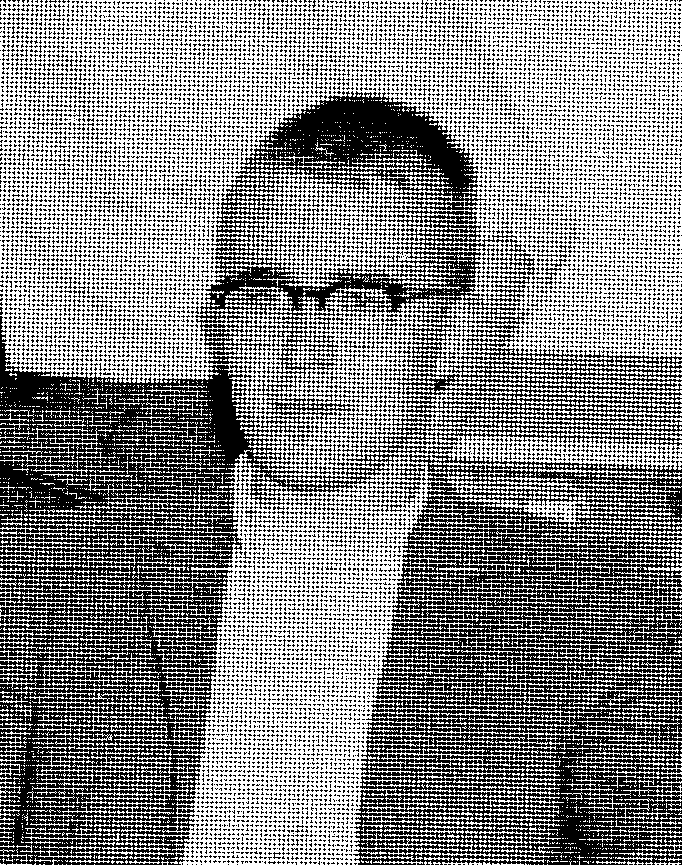
down the hall and dive over all the stuff in the doorway to get in.” Gil later wittingly said he was impressed the College “could tolerate me as long as it did.” Here is a photograph of him on the Maverick staff from the 1958 Cyclone.
He subsequently obtained his B.A. degree in Classics from the University of Nebraska-Omaha and his Ph.D. in English from the University of Nebraska-Lincoln. Gil then taught English at Bluefield College in Virginia and the University of Nebraska-Lincoln before becoming a book editor at the University of Nebraska Press.
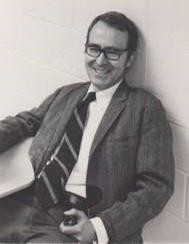 In 1984 Gil moved to Williamsburg, Virginia to be the Managing Editor of Book Publications for the Omohundro Institute of Early American History and Culture (https://oieahc.wm.edu/) at the College of William & Mary. For the next 30 years he edited important books for early American history scholars while training many students in the art of meticulous editing. Here is a photograph of Gil from his years at the Institute.
Upon his retirement at the Institute, its Director said Gil had “decided to devote himself full time to his Porsche and his pipe and to leave dangling participles, run-on sentences, misplaced modifiers, and other excruciating grammatical atrocities” to his successor while over sixty colleagues, authors, postdoctoral fellows and editorial apprentices expressed appreciation for his many talents. An author said Gil “could sense pretentiousness like a pig sniffing out a truffle.” Another author complimented Gil’s skill as a Latinist in re-translating a poem from Latin to English as well as “his deep knowledge of Italian Baroque violin music.” A female author said, “His repartee made me feel like the heroine in a 40’s musical, the one where the plucky young thing has her future handed to her by the smoky-voiced cynic with a heart of gold.” Yet another person shared what he called “Gillicisms; You may do as you wish, but you should know where linguistic purity lies—Incoherent: could you recast?—The more useful and less pedantic way to handle—A little bit of unneeded verbiage.” (Hoffman, From the Directo’s Desk (https://oieahc.wm.edu/uncommon/131/index.cfm); Teute, Of Pigs and Prose: Excerpt from Gil’s Book of Remembrances, Compiled Fall 2012-Spring 2013, https://oieahc.wm.edu/uncommon/131/pigs.cfm)
Similar thoughts were uttered in the Institute’s Memorial for Gil by Fredrika Teute, the Director of its Book Publishing Division. (http://oieahc.wm.edu/ucs/memorium_kelly.html). She said the following:
chocolate chip cookie-muffins. He was an aficionado of the Baroque canon: Purcell was a favorite. Mozart he found insipid.”
Gil’s eccentric wit also came out in remembrances in the Nelsen Funeral Home’s Guest Book. An editor apprentice observed, “Gil taught me editing in one of the best summers of my life, including travels in publishing he’d arranged around Virginia and North Carolina, accompanied by his many tales, observations, and puffs on his ever-present pipe. Gil’s manner of table talk [was] charming and edifying. [He had an] inimitable drawl or his way of delivering a line you’re not quite sure is a joke and waiting for it to sink in.”
Relatives of his former wife recalled Gil’s “singing loudly and off tune at a St. Patty’s Day Party while sipping Irish coffee…..[his] turning us on to seltzer bottles and coke syrup [his] making a toothbrush function as a turn/blinker lever by melting the end lighting up his pipe while eating at a Mexican restaurant and changing the scent of the whole place. grinding the gears in the Peugot, and reminding me of Colombo……and . . . listening to him talk while looking over his glasses. Heaven now has an acting Managing Editor!”
Gil is survived by his daughter Heather Hobgood and her husband, Brandon; two sisters, Lynne Cheshire and Colleen Saariscsany (Jim); and many nephews and nieces.
Duane W. Krohnke
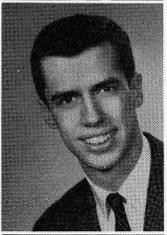 From Ferguson, Missouri, Keith had an illustrious four years at Grinnell. Academic success: Hermits (freshmen men’s honorary), Friars (senior men’s honorary), Phi Beta Kappa, B.A. with Honors in Chemistry. He also had athletic success as letterman in cross
country and track and member of Men’s Honor G. Keith also was ivolved in campus activities: Board of Religion, member of College’s GE College Bowl Team and Grinnell Players inaugural year.
For his three summers before graduation, Keith stayed in town to do chemistry research with Professors J.D. Danforth and William Nevill. During his first three academic years, he lived in Smith Hall, but for his senior year he moved to West Norris Hall for its
In addition to his chemistry courses, Keith had positive memories of learning how to write in his freshman English course with Professor Herb Prescott, of presenting a scene from Tennessee Williams’s The Glass Menagerie with classmates Alida Snyder and Frank Scott for a class with Professor Ned Donahue and American history with Professor Joe Wall.
Nor can it be forgotten that he and classmate Phyllis Ball met and dated at College and got married in August 1966 and had two daughters, Jennifer and Jill. Their marriage, however ended in divorce in 1998.
After Grinnell, Keith went to Harvard, where he earned degrees in chemistry: M.S. in 1963 and Ph.D. in 1967.
Immediately after graduate school, Keith obtained a position in the Chemistry Department of Colorado College, which he filled with distinction until his retirement in 2017 while also teaching an interdisciplinary science course for non-science majors, field courses in astronomy, biology and geology, a course about science and religion and courses in its Feminist and Gender Studies program.
In 2005 Keith fell in love with and married Salwa Hanna, a former student who became a physician specializing in treating headache pain. After his retirement from Colorado College, Keith became the office manager of her Headache Clinic of Denver.
Keith is survived by Salwa, Daughters Jennifer [last name?] and Jill [last name?], son-in-law Frank; his brothers Terry and Rodger; his first wife Phyllis; and eight cousins on his father’s side.
Duane W. Krohnke
Koteen, Robert M. (08/16/39–09/06/99). Bob Koteen from Pleasantville, New York received a B.A. in Mathematics from Grinnell in 1961. He was active in the campus radio station (KGRW) and was a resident of South Younker Hall. He also obtained a M.A. in mathematics from Columbia University Teachers College in 1964.
Bill Kell of Chicago, Illinois was graduated with our class in 1961 with a B.A. degree in American Studies. He was active in campus journalism with the Scarlet & Black newspaper, the Cyclone yearbook as Associate Editor (1958-1959) and Editor (1959-60) and as a member of the Board of Publications and the journalism honorary society (Sigma Delta Chi).
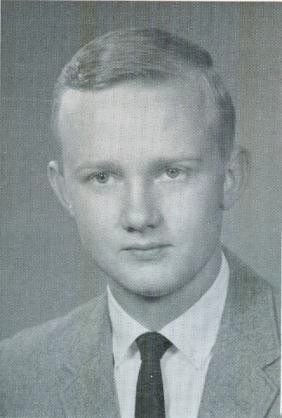 When Bill was Cyclone Associate Editor, he and the Editor, Joe Nassif, ’60, got the publisher’s representative “drunk as a skunk” and then proceeded to negotiate details of the publication contract for the 1959 edition “into the wee small hours of the morning” often to the amusement of gathered students below the open windows of the yearbook’s second floor office in the old Student Union. As a result, Bill Halama ’62 believes Grinnell “got better quality yearbooks for the price it paid than any other school in the country.” (Indeed, the 1959 Cyclone is larger in size and features than the others during our years at the College.)
Halama adds that Kell “was a very bright guy with a quick and sharp sense of humor and a definite way with words.”
As a member of Cowles Hall’s House Council for 1960-61, Kell was a co-instigator of its secession from student government when the Hall proclaimed it would make and enforce its own rules, would no longer be part of student government and would not be subject to C of HP rules and dictates. (For more details of the secession see Ernie Rutherford’s obituary.)
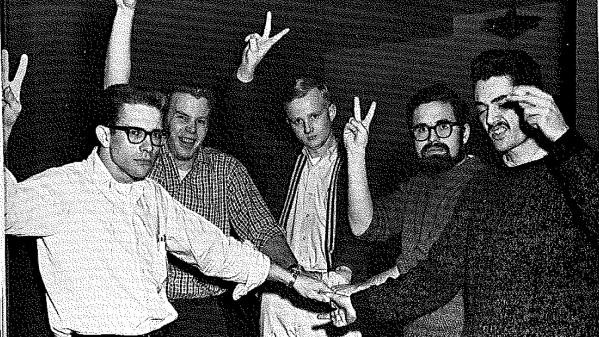 To the left is a photo of the leaders of the Cowles secession, all 1961 class members (from left to right): Ernie Rutherford, John Powers, Bill Kell, Jack Pitts and John Morris.
Upon graduation Kell was awarded one of the College’s Travel Service Scholarships and in1961-1963 served
as an Instructor of English and American Studies at Anatolia College in Thessaloniki, Greece. This experience convinced him that his future lay in communications, teaching and public service.
With him at Anatolia was classmate Nancy Welch Barnby, who says Bill “fully embraced the Greek experience, not only becoming quite proficient at speaking Greek, but also occasionally enlisting [her and other] fellow American teachers to aid him in hosting a typical Greek feast — once with two spit-roasted suckling pigs as the entre.”
Returning to the U.S., Bill served in the U.S. Army Reserve and worked for Pacific Telephone in San Francisco, California before moving in 1964 to Minnesota, where he lived for the rest of his life.
He went to graduate school in American Studies at the University of Minnesota, which granted him the M.A. degree in 1972. While at the U of M he served as Assistant Director of its Liberal Arts Honor Program and initiated Research magazine that highlighted the contributions of faculty and staff.
Thereafter Bill was Director of Communications for Medtronic Corporation and a Managing Partner of a management consulting firm (the Forsythe Group) and an employee of another such firm (Wells & Miller) and the Minnesota Pollution Control Agency, where he worked on plans to improve water quality in the Minnesota River Basin.
For over 20 years Bill also served as an Adjunct Professor at the Twin Cities’ Metropolitan State University where he taught communications and public relations courses. Nancy Welch Barnby says that he was “popular in the classroom because of his sage wit. He loved those classes, and the kids loved him. He considered those classes part of his avocation — fun to have after a day of work at his other job.”
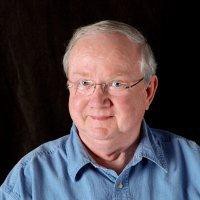 To the left is a recent photo of Bill from his Linkedin profile.
In 2010 Bill joined Golden Valley [Minnesota] Lutheran Church (Missouri Synod), which believes that “the entire Bible is the inspired message of God’s love and hope for all people . . . [and] is without error.” His pastor reports that Bill “always shared a thoughtful insight” about the sermons and was “always receptive to the message that in Christ there is forgiveness and that Jesus loved him.” A church member recalls that Bill loved the contemporary music at its services and its child care center.
The program for his funeral at the church said, “Bill was never shy about voicing his opinions, always backing them up with forceful logic and well-documented evidence. He championed Liberal Arts education, an equitable society, and the importance of research . . . [and] relished discussing public policy.” His “curiosity, enthusiasm, and sense of humor” also fondly were remembered.
An only child whose parents died when he was young, Bill was single and had no known relatives when he died of a heart attack after being in a nursing home to recover from a broken ankle.
Bill, however, became a beloved “adopted” uncle to the daughter of a couple who introduced him to the Golden Valley church. She, however, ignored Bill’s advice to go to Grinnell and instead attended St. Olaf College.
Bill also served as an “Uncle” to Max Brauer (’07) from his birth through a close friendship with his parents, Ralph A. Brauer (’67) and Donna J. Herman Brauer (’68). Growing up, Max enjoyed spending Christmas Eve with Uncle Bill, who taught him at a young age how to make saganaki (flaming Greek cheese). They also enjoyed many picnics and trips to comedy clubs. Though Bill did not steer Max towards Grinnell or his subsequent decision to become a lawyer, Bill was happy about the first choice and eventually accepted the latter. Max fondly remembers Uncle Bill for his wit, way with words, and skepticism of anything “normal” — all of which had a profound impact on Max’s worldview.
Gifts in Bill’s memory were encouraged to be made to St. Paul’s Union Gospel Mission, which “helps people in trouble [with such things as] . . . addiction to alcohol” and which had provided such assistance to Bill.1
1 This memorial is based upon the Alumni Office’s file for Bill Kell; William Kell Obituary, StarTribune (July 3, 2013); Bill Kell Profile, Linkedin.com; Metropolitan State University, http://www.metrostate.edu/; Union Gospel Mission, www.ugmstpaul.org; Golden Valley Lutheran Church, www.gvlc.net; Lutheran Church, Missouri Synod, http://www.lcms.org; William R. Kell Memorial Service Program and Obituary, July 11, 2013; Rev. Rex Rinne, Message for William R. Kell Memorial Service, July 11, 2013; email, Bill Halama to Duane Krohnke, July 18, 2013; conversations with Rev. Rex, Rinne, Cheryl Forsyth, Ralph Brauer, Donna Brauer, Max Brauer, Nancy Welch Barnby.
 Keith, George D. (04/25/1939–10/23/2007). After three semesters at Grinnell, George Keith transferred to the University of Colorado, where he received a J.D. degree in 1963.
He spent the next two and a half years as an FBI agent, primarily investigating civil rights cases in Mississippi. The most prominent one was the 1964 disappearance and murder of civil rights workers Michael Schwerner, James Chaney and Andrew Goodman that was depicted in the movie Mississippi Burning. George was part of the forensic team that recovered the workers bodies in an earthen dam. Afterwards he said that the Robert Kennedy Justice Department was “extremely interested in making sure that the full powers of the federal government were used to accomplish the civil rights revolution.” At the same time, George said, the FBI was trying to determine if there was a substantial communist influence within the civil rights movement. (Kinney, Late Waterloo lawyer probed ’64 civil rights slayings for FBI, Waterloo Courier (10/26/07), wcfcourier.com/…/article_ce0o73d8-535; Kinney, “Mississippi Burning” revisited: Waterloo lawyers recall their “Freedom Summer” dealings, Waterloo Courier (03/05/89).)
From 1966 through approximately 1993, George practiced law in his home town of Waterloo, Iowa. In the 1980s he helped to mediate farmer-creditor disputes. He also took occasional cases without fee. One was a messy divorce and child custody case for a woman. Later she said that George was “the kindest, most optimistic supporter a person in my situation could have asked for” and that his help was “a pivotal benchmark in my life and in the lives of my children.”
In 1968 George as an assistant county attorney in Waterloo prosecuted and convicted the subsequently infamous “Killer Clown” John Wayne Gacy, Jr. on a sodomy charge. Although sentenced to 10 years imprisonment, Gacy was paroled in 1970 and returned to his native Chicago. In 1980 an Illinois jury found him guilty of 33 brutal murders of boys and young men over six years and ordered him to be subjected to the death penalty. Gacy’s execution finally took place in 1994.
From 1993 through approximately 2005 George lived in California where he was a corporate general counsel and involved in real estate brokerage. In 2005 he returned to Waterloo where he worked as a legal assistant, his Iowa attorney’s license having expired, until his death.
George is remembered for being an exceptionally bright man with many passions, ranging from golf and skiing to politics, community theater and music. In his freshman year at Grinnell he was in a glee club (Scarleteers?) with Herbie Hancock, and later George often told the story of his once saying to the glee club that Herbie was off pitch and being immediately contradicted by the director.
I did not know George while we were Grinnell students, but connected with him in 1984 when he attended a liberal arts seminar for lawyers that I organized at the College. Afterwards, George described himself as a “born again fallen-away Grinnellian.” The College, he said, “has a quite palpable aura” and was “the place where [many of our enduring values] . . . were refined, buttressed or altered in an atmosphere which required the free exchange and testing of ideas.”
George was twice married and divorced. He died of kidney cancer and was survived by a son, Andrew D. Keith, and a daughter, Elizabeth K. (Keith) Walker, and five grandchildren. (George D. Keith (1939-2007), Waterloo Courier (10/26/07), http://wcfcourier.com/lifestyles/announcements/obituaries/friday/article_564c7b59-6cb7-5419-89ed-c8b9e6d5d85e.html.) ByDuane W. Krohnke
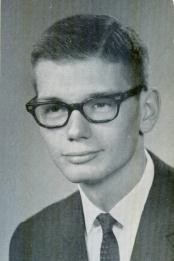 Bob Johnson of Glenview, Illinois and earlier of Ottumwa, Iowa was graduated from the College in 1961 with a B.A. degree in Music Education. He was a North Younker Hall resident and a member of the College Choir and Band. Bob was especially proud of the College’s granting him the Henry York Steiner Award for music composition.
During his freshman year he met classmate and fellow music student, Maxine Frahm. Their first date was for a coke in the student union. Near the end of their senior year, they were engaged to be married although Bob said as a future church musician it would be a long time before he could financially support her. “No problem,” said Maxine since she also planned to work. One year later, June of 1962, they were married in her home town of Mason City, Iowa.
Another year passed, and in June 1963 Bob received a Master’s Degree in Sacred Music from Union Theological School of Sacred Music in New York City. His master’s thesis was “Sonata for Organ,” which is available online (http://www.worldcat.org/title/sonata-for-organ/oclc/505326890).
Thereafter until retiring in 2005, he was a Minister of Music in Presbyterian and Congregational churches in New York, Illinois, Pennsylvania and Massachusetts. He was an active member of the American Guild of Organists.
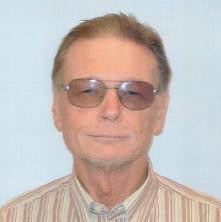 Maxine remembers Bob as “a loving, patient, attentive, sensitive and caring man” and “a good listener, friend, husband and father.” He loved to garden and enjoyed hiking, swimming, exercising, reading, photography, travel and attending concerts and theatre. The two of them enjoyed playing piano duets, and Bob was a “wonderful accompanist, following [her] every move and nuance” on the flute.
The two of them considered themselves “very fortunate to have met and joined hands in a lifetime of music, children, friends, family and good times.”
Near the end of his life, Bob battled Alzheimer’s disease and brain cancer, and knowing his remaining life span would be short, he planned his own memorial service at Second Congregational Church of Attleboro, Massachusetts. It featured music for organ, flute and voice by great composers, including Bach, Handel, Mozart, Brahms, Dvorak, Ralph Vaughan Williams, Fauré and Massenet. The conclusion was the magnificent Toccata from Organ Symphony No. 5 by Charles-Marie Widor. Afterwards one of the 200 people in attendance said, “I thought I was in Boston Symphony Hall: it was so wonderful.”
In addition to Maxine, Bob was survived by their two daughters (Brenda Lynn Johnson, Grinnell ’85 and Janine Suzanne Johnson), two sons-in-law (Robert Barringer and Marc Dahl), a brother (Philip Johnson) and nephews and cousins.1
1 This memorial is based upon the1958-1961 Cyclones and the Alumni Office’s file for Bob, including his obituary in Attleboro’s Sun Chronicle (July 20, 2013) and materials from his October 26, 2013, memorial service (Program; Maxine’s “Portrait of Bob, the Family Man;” Ken Hart ‘62’s “In Memorium: Robert W. Johnson;” and an audio recording). Any of these materials are available upon request from the College’s Alumni Office or from Maxine Frahm Johnson.
Carol L. Eaton from Omaha’s Westside High School attended Grinnell College, 1957-1959. Her freshman year she lived in Mears Hall and roomed with her high school classmate, Kay Rydberg. Her sophomore year she was a member of Young Republicans.
In 1959 she returned to Omaha to work for Mutual of Omaha for a year, after which she attended the University of Nebraska in Omaha for a year. After a brief marriage and divorce (1961-63) to Rudy L. Rezac, Jr., Carol moved to California, where she worked in a CPA office and took accounting courses.
In 1965 she returned again to Omaha and obtained a Real Estate and Insurance license, but left that to return to accounting.
In 1967 she married Dale Johnston, and the two of them owned a bar and grill in South Omaha and managed rental properties. After his death of cancer in 1989, Carol went to work for a brokerage firm.
Carol was survived by her sister, Catherine M. Eaton Varlomos; niece, Amy Olson; and great-niece, Mallory Olson.
Westside High School Class of ’57 — Omaha, Nebraska –Memories and Life Stories (Sept. 2007), http://www.greggmillett.com/WHS_Memories_and_Life.htm; Obituary: Carol E. Johnston, Omaha World-Herald (July 29, 2012), http://www.legacy.com/obituaries/omaha/obituary.aspx?pid=158796304#fbLoggedOut.
Jones, Howard David (“Howie”) (11/14/1939–10/16/2005). Howie Jones of Libertyville, Illinois was a student at Grinnell for two years (1957-59). He got involved in a circle of late-night poker players in Gates Hall lounge which distracted him from studying. Howard took French from Odette de Lecluse, who became almost his surrogate mother after his father’s death. I hung out with him a lot at the College.
Howie was a fascinating fellow who liked to cultivate an aura of mystery about himself, centering on vague stories that his family was being investigated for their involvement in the production of the short-lived Tucker automobile. I thought of him as a funny, good-hearted kid who was “off-center” a little and liked to get your attention by saying weird things. In retrospect, I wonder if his life-long penchant for comical, bizarre antics hid some demons within himself.
In 1962, Howard obtained a B.A. degree from Drake University, and in 1977, a diploma in medicine from the Faculty of Medicine of the Autonomous University of Guadalajara, Mexico. In between he worked in Chicago as a grain broker and merchant, 1962-63, and as a reporter for the Chicago Tribune, 1967.
After he obtained the medical diploma in 1977 and apparently through July 1992, Dr. Howard Jones worked as an anesthesiologist, perhaps intermittingly, in various cities in the U.S. In October 1984, he obtained an Iowa medical license and thereafter worked as a physician in Clinton and Des Moines. In June 1991 Howard agreed to settle a complaint about his alleged substandard anesthesia care; the settlement placed his medical license on probation for five years and required him to restrict his practice to a residency program, to continue psychiatric treatment, to abstain from the use of alcohol or controlled drugs and to submit to blood or urine testing. Howard then commenced a residency program at a Des Moines hospital, but a year later it would not renew his participation in the program, and Howard left Iowa and the practice of medicine and returned to Chicago. Later, in 1993, the Iowa Board determined that he had not complied with the probation terms and continued the probation until his license expired in November 1993. (Iowa Board of Medicine, Medical License Verification (Howard David Jones), http://medicalboard.iowa.gov/find_physician/index.html [Jones, Howard].)
While at Grinnell, Howard met and dated Bonnie Postl, who started with our class, but who graduated in 1962 with a B.A. in English. That same year Howard and Bonnie were married, and in 1973 their only child, Rhys D. Jones, was born. (Rhys eventually went to Grinnell, graduating with a B.A. in English in 1996 and afterwards becoming an accomplished and noted professional old-time fiddler.)
By 2005, in the words of a friend of the family, Howard apparently has been spiraling downward both mentally and physically for several years and having a problem with restricted blood supply to the brain. In early October 2005 Howard was arrested for attacking Bonnie and keeping an unregistered loaded gun in their apartment, and he pleaded guilty to the domestic battery charge and was ordered to have a mental health evaluation, but the gun charges were dropped, and he was released after paying a small fine. At the same time Bonnie obtained an order of protection against him.
On October 16, 2005, Bonnie along with their son went to the couple’s apartment to retrieve her belongings. Howard was there and repeatedly stabbed and killed Bonnie and injured their son. After two policemen arrived, they found Howard with a bloody knife in his hands telling them to shoot him. When he refused to put down the knife and charged the officers, one of the policemen shot and killed Howard.
(Main, Wife slain despite order of protection, Chicago Sun-Times (10/19/05); Heinzmann & Wang, A tragedy that family saw coming, Chicago Tribune(10/18/05); Zorn, Tributes to Bonnie Jones (11/7/05), http://blogs.chicagotribune.com/news_columnists_ezorn/2005/11/tributes_to_bon.html; In Memoriam–Bonnie Jones, http://rapoports.net/bonnie.) By David A.Nixon
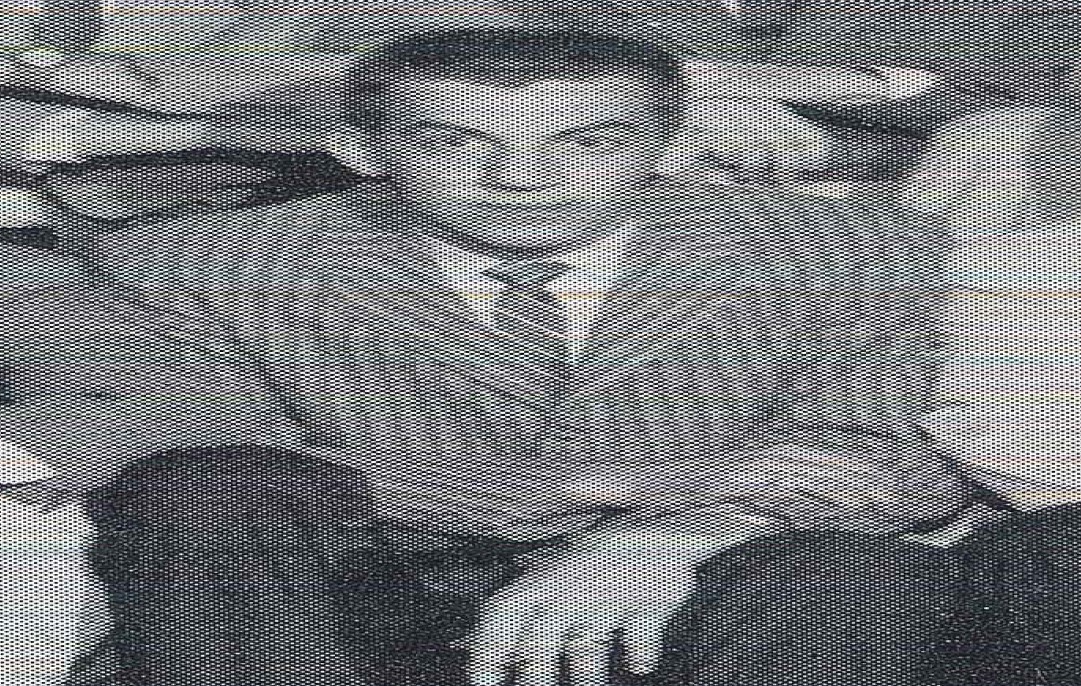 Harvey Huxol from Springfield, Missouri attended Grinnell, 1957-1958. He was a member of Air Force ROTC and its rifle team and received its marksmanship award. Harvey finished at Drury University, a private liberal arts institution in his hometown, with a major in business administration, economics and psychology.
He then spent six years with Dun & Bradstreet as a financial analyst in Kansas City. Afterwards he sold Mooney single-engine airplanes and then went into sales and management for heavy truck and equipment companies (Peterbilt/Kenworth, Caterpillar and DM Computer Services).
Growing up, Harvey enjoyed racing his Packard straight 8 ’40 Olds ragtop, cruising the A&W drive-in and belonging to the hotrod clubs of the day.
Later in life he obtained a pilot’s license. After the Mooney Aircraft shop closed for the day, he and his buddies would fly the planes and play dogfights. He also enjoyed boating in a Glastron boat with a ridiculously oversized Mercury Black Max outboard motor. He won many “outlaw” boat races putting a big grin on his face every time.
Harvey is survived by his wife Jennifer Lavan and their daughter Camille, his sons, Darren and Jason (Marla) and his former wife Marcia, the mother of his sons.
Duane W. Krohnke
