Author: Erica Hoth
Protected: 1972 Class Letter – March 2026
John Canniffe
Canniffe, John Michael (February 24, 1939—March 29, 2025)
John Michael Canniffe from Marbehead, Massachusetts attended Grinnell for two years, 1957-59, where he was a resident of Clark Hall. Afterwards he transferred to Boston College.
He was born on February 24, 1939 in Marblehead and was class president of its public high school in 1957. After graduating from Boston College, he returned to Marblehead where in 1963 he married his hometown sweetheart, Alicia Harkins, and where they raised their five children and ran their businesses, Canniffe’s Mens Wear and Stowaway Sweets.
Michael was a past president of the town’s Rotary Club and Chamber of Commerce, served on the board of directors of the Marblehead Savings Bank, and was a longtime Registrar of Voters for the town. He and Alicia were longtime parishioners of the town’s Our Lady Star of the Sea church.
Michael enjoyed life and gathering with family and friends, especially in Marblehead. He had a gift for always finding something to celebrate and was an eternal optimist. Throughout the years, you could frequently hear him whistling in his backyard as he tended to his garden, particularly to the roses and rhododendron. He was grateful and happiest when his family was together. Saying goodbye was never easy. Baptisms, birthdays, weddings, or just out to lunch, Mike was always looking forward to the next celebration.
One of his friends said, “I have never met a more generous and caring person. As I share this time of remembering a dear friend with you. I too will find comfort in knowing such a great life will continue to thrive in the heavens above. That each of us, especially Mike’s family, will always feel his presence in our hearts. God Bless.”
Another friend said Mike “was so kind to me. When I was very young, he knew we had nothing, he allowed a young kid to have a credit account at his store so I could buy gifts for my family, I will never forget the kindness.”
A married couple had “Many fond memories over the years of Canniffe’s Men’s Store, the place to buy special monogrammed items, Stowaway Sweets with Chamber of Commerce fun times like a Champagne tasting with delicious chocolates in between to clear the palate, fundraising Fashion Show, meeting at the 99 Restaurant where the two often took [their granddaughter] to dinner or enjoying a donut and coffee after Sunday mass. These are some of the memories that we have of Mike & Alicia that we will cherish and not forget. The family has truly lost 2 special people.”
Obituary, J. Michael Canniffe, Dignity Memorial, https://www.dignitymemorial.com/obituaries/marblehead-ma/j-canniffe-12312190 (contains a recent photograph of Michael)
Mary Barwise
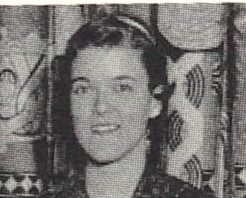 Barwise, Mary Joyce (September 27, 1939—December 6, 2016)
Mary Jo Barwise from St.Paul, Minnesota was a Grinnell student for two years, 1957-58 and 1958-59, residening in Main Hall for her freshman year and Loose Hall her sophomore year.
Her first year she was a member of Tassels (the women’s honorary group) while her second year she was on the reporting staff of the Scarlet and Black student newspaper.
Mary Jo transferred to the University of Minnesota where she obtaine her B.A. in 1961 in its School of Journalism and in 1965 the M.A. degree in the same subject from the University of Wisconsin and was “all but dissertation” from obtaining a PhD in that subject from the University of Minnesota School of Journalism. She also studied divinity in 1968 at McGill University in Montreal.
She then was one of the first women reporters at the Winona Daily News and taught at John Marshall High School in Rochester, MN, Bir Zeit University in Jordan (1966-67), and for 30 years at Metropolitan Community College in Minneapolis, where she was also advisor for the acclaimed student newspaper.
Mary Jo was a champion of the under-dog and was always concerned about justice for all, supporting immigrants, international students, the visually handicapped and rescue dogs, encouraging them with her energy, time, resources and belief in them.
She will be fondly remembered for her loyalty, creativity, compassion, deep interest in others, delightful sense of humor and fiery authenticity.
Obituary, Mary Joyce BARWISE, Twin Cities Pioneer Press (Dec. 11, 2016), https://www.twincities.com/obituaries/mary-joyce-barwise-st-paul-mn/
Duane W. Krohnke
Alice Grimes Daeschner
Alice Grimes Daeschner (June 28, 1939 – March 17, 2023)
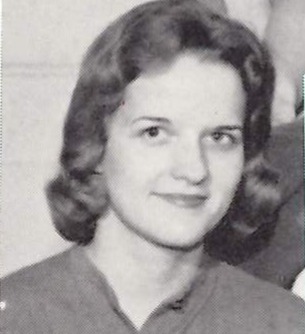 Alice Grimes attended Grinnell College for two years and resided her freshman year in Mears Hall and her sophomore year in Read Hall.
She transferred to the University of Washington and graduated from there in 1963. In Seattle she met and married William Daeschner, and they had two children: Michael Daeschner, who died in 2011, and Deborah Daeschner Barewicz, who lives in Vermont. Alice’s father died in World War II, and her mother was a college professor.
Alice moved often, since her husband served in the Navy as a career officer. Various locations where they lived were the Philippines, California, Japan, Pennsylvania, and Virginia. She enjoyed doing needle crafts, and much of what she made were donated as a part of Nelly’s Needlers, a group supporting Woodlawn Plantation in Virginia.
In 2019, Alice moved to Jerico, Vermont to live with her daughter Debbie, husband Michael Barewicz, and their three children: Meaghan, Choe, and Ryan.
Alice was buried next to her husband in Arlington National Cemetery on July 12, 2024. She is survived by her daughter and family in Vermont, as well as a younger brother in Seattle.
Alice’s daughter wrote: “My mom was generous and did an amazing job of raising my brother and myself. It was not easy being a military family, but she was wonderful at keeping us all centered and well-adjusted. She and my dad focused on education for my brother and me, and we are/were better people for that focus. Mostly, I think she would like to be remembered as a fantastic grandma, since she had very special relationships with my kids”.
Sally Eileen Edgar Johnston
Sally Eileen Edgar Johnston—November 9, 1939—August 5, 2022
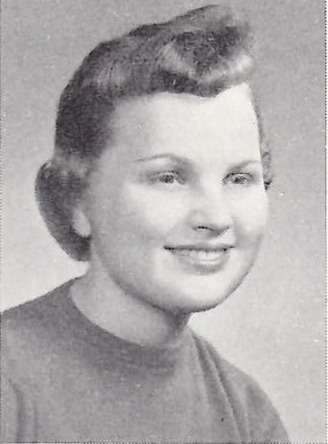 Sally Eileen Edgar from Glenview, Ill was at Grinnell College, September 1957—June 1960. In her freshman year she resided in Main Hall (Baffleboard, Religious Activities Board). She also was active in the International Relations Club. Her sophomore year, she moved to Loose Hall and for her junior year she returned to Main Hall as a member of its Baffleboard and the Religious Activities Board. In June 1961 she completed her BA at Denver University in English, and in 1979 she obtained a Teaching Certification from William Patterson College in NJ.
On June 3, 1962, Sally married Edward James Johnston from Clinton, Iowa, another Grinnell College graduate with honors in Classical Languages (1960), who in August 1961 had changed his last name from Leutke, Jr. to Johnston and who pursued graduate studies in theology at three seminaries that resulted in a 1963 Prize for Excellence in New Testament and Greek and Master’s degree in Christian Education in 1964.
Edward James then embarked on a career in the Episcopal Church with service in Manhattan; Mt. Kisco, NY; Kinnelon, NJ; and Rye, NY. During this time Sally served as an employee of Time Incorporated and Historic Hudson Valley (Tarrytown, NY) and as a freelance legal secretary.
In retirement Edward was Honorary Associate at St. Andrew’s Episcopal Church in Harlem and hosted a Bible study every Saturday morning. In 2013, he and Sally became winter residents of Sarasota with a welcome at its St. Boniface Episcopal Church where they participated at Sunday liturgy and music.
Sally and Edward were the parents of Margot Drake Johnston (10/7/67) and Amy Catherine Johnston (8/1/69) and now Sally and Edward are buried together at Saint Peter’s Episcopal Cemetery in Lithgow, New York.
Sandra Rose Nielsen
Nielsen, Sandra Lee (Rose), (July 5, 1939—April 6, 2022)
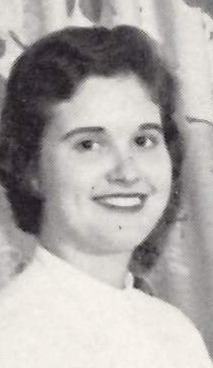 Sandra Lee Rose from Aldan (a borough west of Philadelphia, Pennsylvania) attended Grinnell as a freshman and sophomore. For her first year she was an intramural chair for the WRA [Women’s Recreational Association?]
In December 1957 she sang Christmas carols while walking down the women’s loggia from Mears to Loose Hall for a Christmas Vespers service, where she also sang while Joan Christiansen and Mariann Rice were readers.
For her second year she was a resident of Haines Hall and continued as a member of the College choir. In May 1959 she sang at a Herrick Chapel concert as a member of in an acapella madrigal group that sang “The Swan” by Paul Hindemith and “My Spirit Sang All Day” by Gerald Finzi and six folk songs by Johannes Brahms.
Thereafter she transferred to Pennsylvania University and subsequently had jobs as Export Traffic Manager for Ballagh and Thrall, Inc. in Philadelphia and then as Manager-Buyer for Scandinavian imports for the Scandinavian Center in Plymouth, PA.
On June 3, 1961, she married Svend Nielsen (from Copenhagen, Denmark). They had one son, Sven Eric Nielsen, born April 15, 1966.
Duane “Barry” Wyatt
Wyatt, Duane Barry (02/28/1937–12/15/2009).
Barry Wyatt from Cresco, Iowa received a B.A. degree in Economics from Grinnell in 1961. He was active in the Band and lived in Clark Hall.
Barry married Grinnell classmate, Ann Eaton, in 1963. They had two children: Corbin Wyatt and Elleri Wyatt LeBlanc.
For thirty years after 1965 Barry was an Internal Revenue Service officer in Council Bluffs, Iowa, the National IRS Office in Washington, D.C. and Nashville, Tennessee. After his retirement from the IRS in 1995, he and Ann maintained their home in Nashville while Barry put in nine years as a tax preparer for H&R Block.
Barry was a member of the First Unitarian Universalist Church in Nashville and active in the Humanist Association, Americans United for Separation of Church and State and the National Association of Retired Federal Employees. Ann also recalls that he was skilled around the house, climbing on ladders, digging a trench to lay a pipe, inspecting, assessing and digging holes for a fence and going upside-down to fix something he could not reach. “He could always figure out a way to make broken things work and find one more use for everything!”
Barry was survived by Ann and their two children.
Michael Cromie
Cromie, Michael A. (03/13/39–08/12/10). Mike Cromie attended Grinnell for the first two years of college (1957-59) and was on the staff for the College’s annual year book (1959 Cyclone). As a fellow Rawsonite, I remember him as a guy with a magnetic personality: outgoing and very competitive. After the freshman football team lost to Coe, on the ride back to Grinnell, Mike berated himself for not returning an intercepted pass for a touchdown. He engaged in pranks against other hall mates, nonsensical prepping activities and running a snow removal contracting service. Mike was a good guy and a good friend who will always have a place in my heart.
Mike transferred to Knox College, from which he received a B.A. degree in Psychology in 1963. He subsequently pursued a Ph.D. program in experimental psychology at the University of Florida and Northern Illinois University, but did not receive any graduate degrees.
Instead, Mike worked as a market research analysts and a salesman for book publishers. Towards the end of his life he was a real estate broker in Arlington Heights and Palatine, Illinois. Mike loved golf.
After a long battle with cancer, he died of the disease at his home in Deerfield, Illinois on August 12, 2010. Mike was survived by his wife, Sherrie (Krase) Cromie, two children, three step-children and five grandchildren. “He was a warm and loving man,” said his widow. (Obituary, Michael A, Cromie, Chicago Tribune, Aug. 15, 2010.) By David A. Nixon
Virginia Ehrig Worthington
Worthington, Virginia Lucille (Ehrig)(Swenson)(Somers)(07/02/1940–12/28/2005). Virginia Ehrig attended Grinnell for her freshman year (1957-58) as an early entrant before high school graduation. She lived in Cleveland Hall and was active at the campus radio station (KGRW) and the campus drama group (Grinnell Players). In May 1958 she married Grinnell classmate Curtis Russell Swenson, and in a decision that broke her heart the College demanded that both of them leave because they got married. Later, not surprisingly, she registered a “strongly negative” reaction to her year at the College.
Virginia then transferred to Macalester College, but she received her B.A. and M.A. degrees from the University of Nebraska at Omaha in 1965 and 1970 respectively.
Virginia and Curt had two children (Katherine Anne and John Michael). After divorce, Virginia in 1967 married U.S. Air Force Major Richard Keith Somers, who died in 1971. In 1975 she married Ross L. Worthington, who died in 1978. A year later she married LeRoy C. “Bud” Kinnie, but retained her “Worthington” married name.
In the midst of all of this, she attended law school at Gonzaga University and received its J.D. degree in 1975. She then practiced family law with her third husband and fellow attorney in the firm of Worthington & Worthington in Spokane, Washington until his death; afterwards, in her own firm until 1999 when she moved to Seattle to care for her mother (Frances Hansen Ehrig ’37).
Virginia died in 2005 after a long battle with breast cancer. She was survived by her two children, her sister (Margaret Ehrig Dunn ’65) and her nephew (James W. Dunn ’01).
